
REVIEW · OSAKA, JAPAN
Osaka: 2-Hour Nightlife District Walking & Local Food Culture
Osaka eats after dark. This two-hour walk links the neon of Dotonbori with small food streets, an old temple, a kitchen-tool arcade, and Kuromon Market. I like the way it shows you several sides of Namba in one outing, not just the famous Glico sign.
I also like the small-group format, capped at 15 people, and the chance to ask your English-speaking guide for restaurant ideas for the rest of your stay. Guides such as Kaz, Nako, and Sayaka have helped make the walk friendly and flexible. The main drawback is clear: food costs extra, and the tour does not include a sit-down meal.
Key points at a glance
- Dotonbori starts the evening with Osaka’s famous food streets and Glico sign.
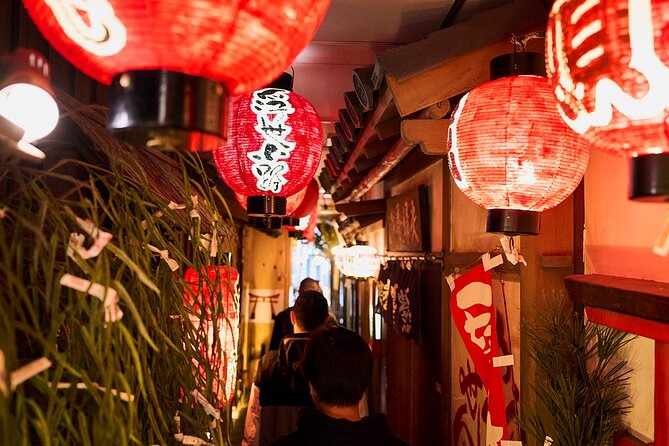
- Hozenji Temple offers a quiet pause, with its water-covered Fudo Myo-o statue.
- Doguyasuji shows the professional side of Osaka cooking, from kitchen knives to restaurant tools.
- Kuromon Market brings seafood, wagyu, fruit, sushi, and food stalls together.
- The guide helps you navigate and choose what to try, but your snacks are paid for separately.
- The $31.84 price is fair for a compact orientation walk, especially if this is your first time in Namba.
Why this two-hour Osaka walk works
Osaka can feel like several cities packed into a few blocks. One street glows with giant signs and restaurant displays. The next is a narrow lane with a small temple. Then you are looking at the tools used by professional cooks or watching seafood being prepared at a market stall.
This tour gives you a useful first look at that mix. It is not a full food tour with a long meal. Think of it as a guided introduction to Namba and Osaka’s food culture, with time to sample a few things if you choose.
That distinction matters. The price is $31.84 per person, but the food is not included. You are paying for the guide, route, local explanations, and help finding your way through busy food areas. If you plan to buy takoyaki, gyoza, seafood, sushi, fruit, or other snacks, set aside extra money.
The walk is also short enough to fit around other plans. You may choose from tour times throughout the day, even though the experience is especially suited to an evening in Osaka’s nightlife district. A night outing gives Dotonbori its full neon effect, while a daytime departure may make it easier to see market goods and kitchen tools.
A few more nights out around Osaka worth a look
- Amsterdam 2 Hour Small-Group Canal Cruise with Dutch Snacks & Bar
★ 5.0 · 1,058 reviews - Amsterdam 2-Hour Evening Cruise With Live Guide and Bar
★ 5.0 · 134 reviews - Tokyo: Shinjuku Izakaya and Golden Gai Bar Hopping Tour (2h)
★ 4.9 · 67 reviews
Meeting the guide near Dotonbori
The meeting point is outside Don Quijote Dotonbori Midosuji at 2-chōme-5-9 Nishishinsaibashi, in Chuo Ward. This puts you close to the Namba and Dotonbori area, with public transportation nearby.
Give yourself enough time to locate the exact meeting spot. Dotonbori is crowded and visually loud, with large signs competing for your attention. A clear meeting point helps, but you should still arrive early rather than trying to find the group at the last second.
The tour returns to the same meeting point. That is handy if you are staying in the area or want to continue exploring nearby restaurants and shops afterward. It also makes the walk easier to fit into a day of sightseeing because you do not need to arrange transportation back from a distant neighborhood.
The group can include up to 15 people. That is not a private walk, but it is small enough for questions and basic conversation with the guide. The experience includes an English-speaking guide only. Food, drinks, and dining are separate.
Dotonbori and the Glico sign: a loud start
The first stop is the Dotonbori Glico sign, one of the most recognizable meeting points in Osaka. You get about 30 minutes in the area, with a focus on street food you may not have tried before.
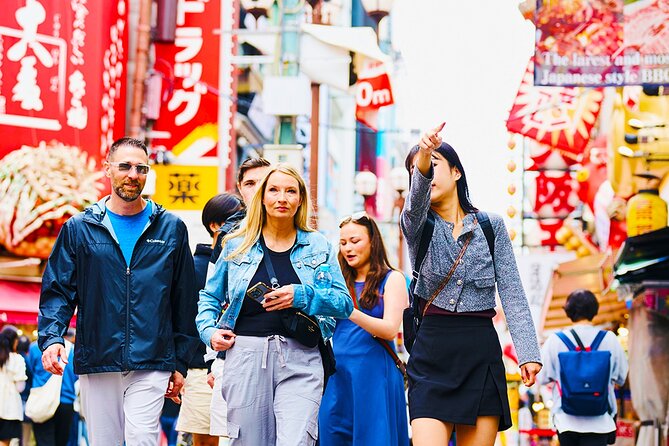
Dotonbori is a good place to begin because it shows Osaka at full volume. Oversized restaurant signs, bright lights, and food displays create the setting. The guide can help you understand what the stalls sell and point you toward familiar Osaka favorites such as takoyaki and gyoza.
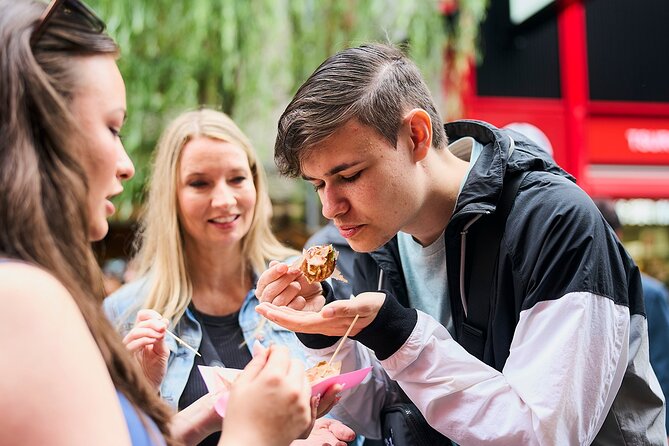
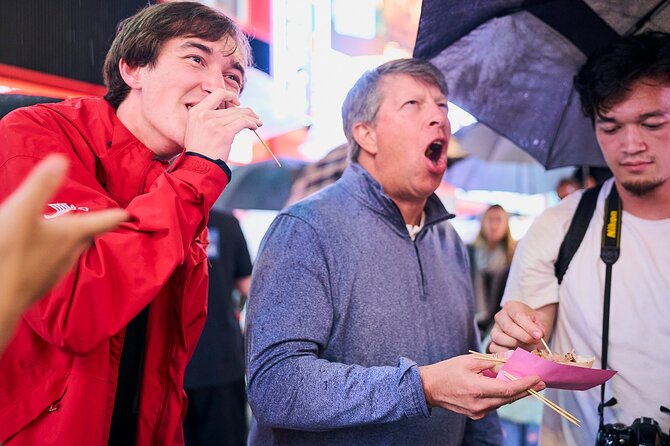
Takoyaki are small batter balls usually associated with Osaka, often filled with octopus and served hot with sauce and toppings. Gyoza are dumplings, commonly pan-fried, and easy to share as you walk. The experience gives you the chance to try these foods, but you pay the vendors directly.
That payment arrangement is worth remembering. You are not receiving a set number of included tastings, and the guide is not taking you in for a full meal. Your spending can stay modest if you choose one snack, or rise quickly if you sample several foods at each stop.
The 30-minute stop is enough to get your bearings and make a few choices. It is not enough for a slow, relaxed meal. If you want a proper dinner, plan it before or after the walk.
Hozenji Yokocho: a quiet temple in the city
From the bright streets, the route turns toward Hozenji Yokocho and Hozenji Temple. The temple stop lasts about 20 minutes.
This is one of the most appealing changes of mood on the walk. Hozenji is a small temple tucked into the city, and its moss-covered statue of Fudo Myo-o is the main focus. Visitors traditionally splash water over the statue while making a wish, which explains the thick green covering.
You do not need a long temple visit to appreciate the place. Twenty minutes gives you time to see the statue, take in the narrow setting, and hear a little about the local custom. It also breaks up the food stops with something quieter and more reflective.
I particularly like this stop because it keeps the outing from becoming a simple march between snack counters. Osaka’s food culture is closely tied to its streets and neighborhoods, and Hozenji helps you see that the area has more than signs, shopping, and quick bites.
The drawback is that this is a brief visit. If you want a detailed Buddhist temple tour or extended time for photography, you may find the stop short. Here, the temple is one part of a wider neighborhood walk.
More Bar Crawls in Osaka:
- Osaka: Namba Pub Bar Crawl with a Local Guide
★ 4.9 · 424 reviews - Osaka: Izakaya Bars Guided Walking Tour
★ 4.9 · 385 reviews - Osaka Pub Crawl and Nightlife Tour
★ 5.0 · 293 reviews - Osaka Local Bar Crawl in Dotombori & Uranamba Area
★ 5.0 · 199 reviews
Doguyasuji: where restaurant tools take center stage
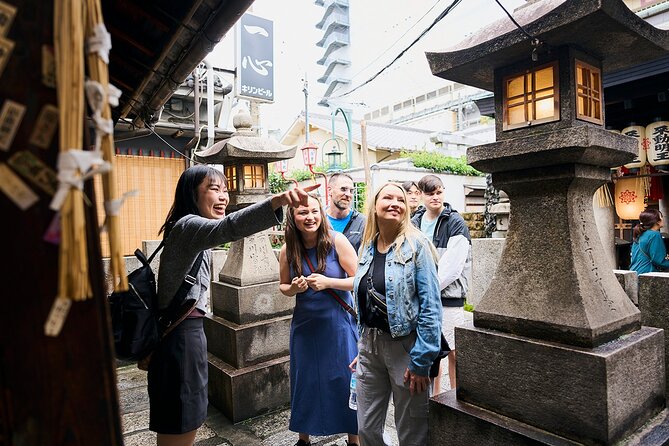
The next stop is Sennichimae Doguyasuji Shopping Street, with about 20 minutes to look at kitchen equipment used by professional cooks.
This is a different kind of food experience. Instead of tasting dishes, you see the tools and objects that help make them. The street is known for cooking supplies, and it offers a practical view of the work behind Osaka’s restaurants.
A guide is useful here because kitchen shops can be hard to interpret on your own. You might see knives, pans, utensils, serving pieces, or the familiar plastic food displays used outside Japanese restaurants. The provided information specifically highlights tools used by professionals, so this stop should appeal to anyone interested in cooking, restaurant design, or Japanese food culture beyond the plate.
Twenty minutes is enough for an introduction, but not for a long shopping session. If you are hoping to buy a knife or another substantial item, ask your guide how much time remains and how purchases may affect your route. The tour continues, so you will want to avoid getting separated from the group.
This stop also adds value for repeat visitors. Someone who has already seen Dotonbori may find the tools street more distinctive and less obvious than the main sightseeing zones.
Kuromon Market: Osaka’s Kitchen
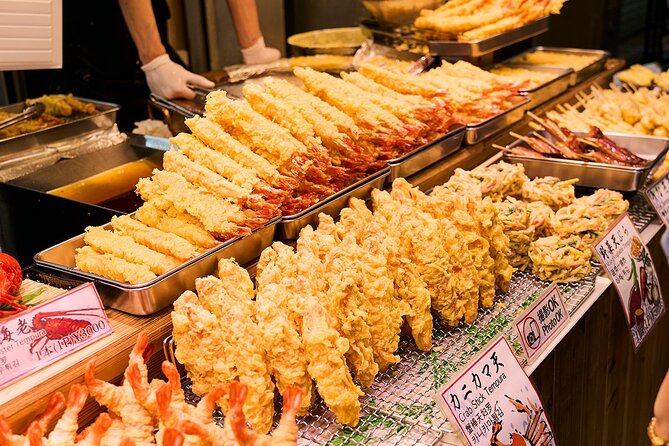
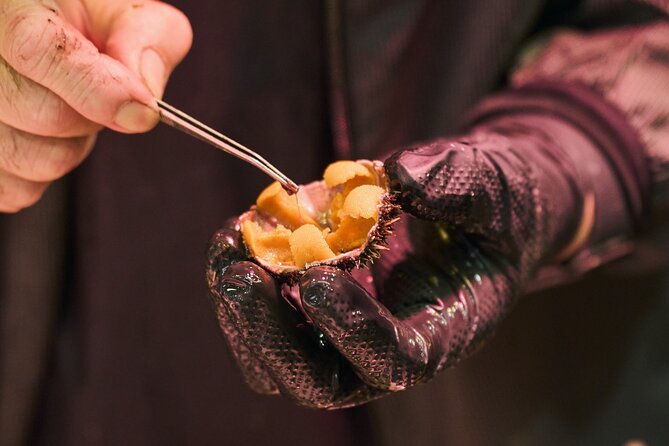
The final major stop is Kuromon Market, known as Osaka’s Kitchen. You get about 30 minutes to see the market and consider foods such as fresh seafood, wagyu beef, fruit, sushi, and other local specialties.
This is where the guide’s help matters most. Markets can be confusing, especially when stalls sell food to eat immediately alongside ingredients intended for home cooking or restaurant use. A local guide can explain what you are looking at and help you decide what fits your appetite and budget.
Kuromon is also a good place to notice the range of Osaka’s food culture. You may see seafood being prepared, meat portions ready for cooking, colorful fruit, and prepared foods meant to be eaten on the spot. The point is not simply to collect samples. It is to see how a food-centered neighborhood works.
Again, food is not included. If you want seafood, wagyu, sushi, or fruit, you buy it at the stall. With only 30 minutes, choose carefully. A popular item may require waiting, and a market snack can take longer to prepare than expected.
The market stop may feel rushed if you want to eat a complete meal. It works better if you treat the tour as a preview and return later for a longer visit. You can ask the guide for suggestions about restaurants and other places to eat during your stay.
What the guides add to the experience
A food district is easy to walk through without understanding much. You see the signs, take photos, and perhaps choose the stall with the longest line. A guide gives the streets more meaning and helps you make decisions without spending your whole evening guessing.
The named guides connected with this experience include Kaz, Nako, and Sayaka. Kaz has been praised for taking people to classic and less obvious food spots. Nako has been described as friendly and interesting during a walk around Namba, the markets, and nearby sights.
Sayaka’s approach appears especially flexible. A tour with her included food, local sights, history, and even a try at pachinko, with the option to adjust the outing to personal tastes, including sake. That does not mean every departure will include the same additions, so you should discuss your interests at the start.
This flexibility is one of the strongest reasons to book. Tell the guide if you care most about food, markets, temples, nightlife, sake, or shopping for cooking tools. The route has several themes, and a short conversation can help you get more from the two hours.
Food budget and overall value at $31.84
At $31.84, this is a reasonably priced orientation tour, not a bargain meal package. The value comes from the route and the local guidance rather than included food.
I would consider the price worthwhile if you are new to Osaka, want a short introduction to Namba, or feel unsure about ordering from street stalls. It can save time and give you ideas for later meals. The guide may also help you avoid spending your whole evening in the most obvious tourist spots.
The value is weaker if you already know Dotonbori, Hozenji, Doguyasuji, and Kuromon Market well. You can walk through these areas independently, and you will still need to pay for your own snacks. Independent visitors who enjoy researching food stalls may prefer to spend the $31.84 directly on dinner.
For most people, I would budget for at least one or two paid snacks, with extra money available for market seafood, wagyu, or drinks. The tour does not include dining in, so do not arrive expecting a guided restaurant meal.
Timing, walking, and group size
The activity lasts about two hours. The listed stops account for roughly 100 minutes, leaving the rest for walking between areas, explanations, and time to make food choices.
That is a brisk pace. Wear comfortable shoes and keep your belongings manageable, especially if you plan to buy food or kitchen items. The route moves through busy shopping and market areas, so staying near the guide will matter.
The experience is near public transportation, and most people can participate. No special fitness requirement is stated, but you should be comfortable walking between several urban stops for two hours.
The maximum group size is 15. A group this size allows more personal contact than a large bus excursion, while keeping the price below that of a private guide. The tradeoff is that the guide cannot give every person unlimited attention at every stall.
Who should book this Osaka food walk?
I would recommend it most strongly for:
- First-time visitors who want a quick introduction to Namba
- People curious about Osaka street food but unsure where to begin
- Visitors who enjoy markets, cooking tools, and local customs
- Anyone who wants restaurant suggestions for later meals
- Couples or small groups who prefer guided walking to self-directed browsing
- Visitors with only a short window available for food-focused sightseeing
It is less suitable if you want a long sit-down meal, a private tour, or a carefully planned tasting menu. It is also not ideal for anyone who wants every food sample included in the booking price.
The tour works best at the start of your Osaka stay. You can use the guide’s suggestions later, return to Kuromon Market with more time, and choose restaurants with a better sense of the neighborhood.
Cancellation and booking details
Confirmation is provided when you book. Free cancellation is available if you cancel at least 24 hours before the local start time. Within 24 hours, you receive no refund, and changes are not accepted.
Because the tour averages about 21 days of advance booking, it is sensible to reserve early if your Osaka dates are fixed. Check the meeting point carefully, and remember that the experience ends where it begins, at the Don Quijote Dotonbori Midosuji area.
Should you book this two-hour Osaka tour?
Book it if you want a friendly, efficient introduction to Osaka’s food districts, with enough variety to help you plan the rest of your stay. The mix of Dotonbori, Hozenji Temple, Doguyasuji, and Kuromon Market is the real strength. You get street food, local belief, professional cooking tools, and market culture in a compact route.
Skip it if your main goal is a meal with included tastings. Since food and drinks cost extra, the tour does not replace dinner. But for $31.84, the English-speaking guide and focused route offer good value for a first visit, especially if you use the advice to shape the next few days of eating in Osaka.
FAQ
How long does the Osaka walking tour last?
The tour lasts approximately two hours.
Where does the tour start?
It starts at Don Quijote Dotonbori Midosuji, 2-chōme-5-9 Nishishinsaibashi, Chuo Ward, Osaka, 542-0086, Japan.
Where does the tour end?
The activity ends back at the meeting point.
Are food and drinks included?
No. Food and drinks from street vendors are not included, and the tour does not stop for dining in.
What food might I try?
The route gives you the chance to try Osaka street foods such as takoyaki and gyoza. Kuromon Market also offers seafood, wagyu beef, fruit, sushi, and other foods that you can buy separately.
How large is the group?
The tour has a maximum of 15 people and includes an English-speaking guide.
Just added around Osaka
- Osaka: Private Food Tour & Bar Hopping in Namba★ 4.5 · 4 reviews
- Osaka Nights: Ultimate Pub Bar Crawl with an Expert Local Guide★ 5.0 · 14 reviews
- Osaka American village Bar hopping tour★ 5.0 · 14 reviews
- Osaka Umeda:PICCADILLY LIVE SHOW & NIGHTCLUB TICKET & Shisha★ 4.7 · 10 reviews
- 3.5h Osaka Night guided Local Bar Hopping, Sake & Karaoke★ 5.0 · 27 reviews
- Osaka: Unforgettable Bar Hopping in Kyobashi!★ 5.0 · 4 reviews
- Osaka: Deep Food Tour and Bar Hopping in Namba★ 5.0 · 2 reviews
- Osaka Bar Hopping | Explore Hidden Bars & Izakayas in Namba★ 4.7 · 18 reviews
Bar Crawls, compared.

Madrid Tapas & Wine Tasting Walking Tour – Small Group Local Bars
Read our review →
Tokyo Bar Hopping Tour in Shinjuku (All-You-Can-Drink + Dinner)
Read our review →
Guided Pub Tour to Ruin Bars with Games & 6 Shots
Read our review →

Bar and Club Crawl to 5 Central London Venues
Read our review →
Aruba Nightlife and Barhopping on Chogogo Party Bus
Read our review →
Browse the lists this tour appears in