
REVIEW · MUSASHINO, JAPAN
Samurai Guide Sho’s:Kichijoji Night Training–Drink & Dish Pairing
Tokyo has a quieter drinking side. Samurai Guide Sho’s Kichijoji Night Training introduces you to it through three small local stops, pairing Japanese drinks with carefully chosen dishes rather than pushing you through a loud bar crawl. I like the small group limit of five and the way the evening uses food to guide your drink choices.
I also like the reserved seating in Harmonica Yokocho and the mix of sake, Japanese craft beer, gin, and sushi. The main drawback is cost: at $97.73 per person, drinks are extra, so this is not the cheapest way to spend an evening in Tokyo.
This experience suits you if you prefer a slow night, good conversation, and a little uncertainty about what to order. It is a poor match for anyone seeking all-you-can-drink service, a packed sightseeing schedule, or a party atmosphere.
Key points at a glance
- Three distinct food-and-drink stops: Start with dishes and drinks in Harmonica Yokocho, continue to a Japanese craft beer bar, and finish with seasonal sushi and sake.
- A maximum of five people: The small group allows Sho to offer personal pairing suggestions and keep the evening relaxed.
- Drinks cost extra: Food at the three stops is included, while drinks generally cost about ¥1,000 each and are ordered individually.
- A real Kichijoji night: You spend time in small local bars rather than moving through a standard tourist route.
- The modern Samurai idea is understated: Sho wears an indigo haori as a symbol of respect, not as part of a loud costume show.
- Food comes first: You are encouraged to choose the drink that best matches each dish, with gentle guidance if you are unsure.
Meeting Sho at Kichijoji Station at 5:30 pm
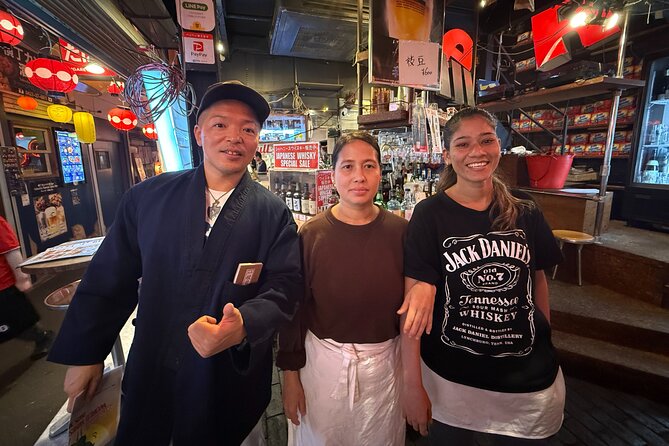
The evening begins outside Baskin-Robbins at the north exit of JR Kichijoji Station. This is a useful meeting point because Kichijoji Station is easy to reach by train, but the north side can feel busy at night, so arrive a few minutes early and look for Sho in his indigo haori.
The outfit gives you a clear point of recognition without turning the meeting into theater. Sho’s modern Samurai theme is based on ichi-go ichi-e, the Japanese idea of treasuring a once-in-a-lifetime meeting. He is not presenting a sword show or staging a historical performance. The haori is simply a visual sign of the evening’s spirit.
From the start, expect a companionable style rather than a formal lecture. Sho uses simple English and translation tools when needed. He does not try to explain every dish, custom, or street corner in detail. If you enjoy long cultural talks, you may find the explanations light. If you prefer a natural evening with only the information you need, this approach should work well.
The whole experience lasts about three hours and ends back at the station meeting point. Walking is part of the night, so comfortable shoes are sensible.
Other nights out people book around Japan:
- Tokyo Bar Hopping Tour in Shinjuku (All-You-Can-Drink + Dinner)
★ 5.0 · 3,587 reviews - Tokyo: Shinjuku Local Bar and Izakaya Guided Walking Tour
★ 4.9 · 1,794 reviews - Shibuya Meltdown Nightlife Tour: All-You-Can-Drink Bar Hopping
★ 5.0 · 1,058 reviews
Harmonica Yokocho sets the mood
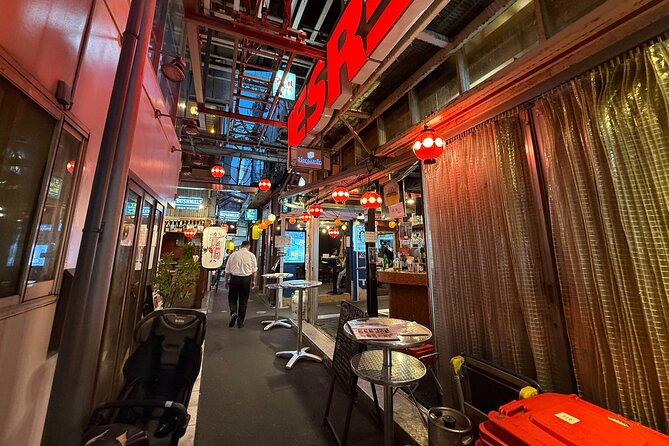
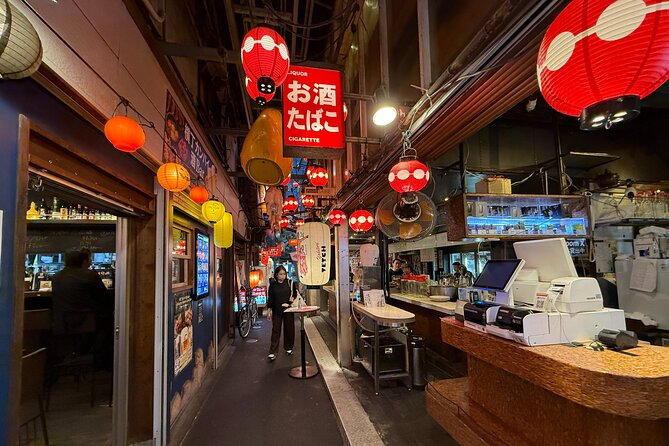
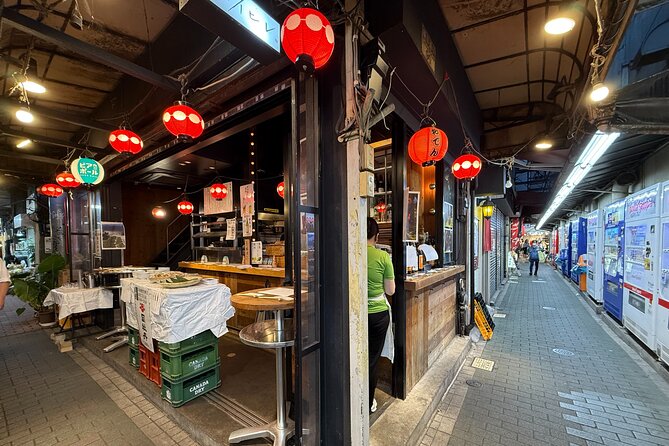
The first stop takes you into Harmonica Yokocho, a maze of narrow alleys near Kichijoji Station. Its small bars and compact food shops create the old Tokyo atmosphere that gives this evening much of its character.
You have reserved seats at a yakitori bar, which matters in a place where space is limited and the best seats can be hard to find. Instead of standing around waiting for an opening, you can settle in and watch the alley life pass close by.
Sho selects four or five local dishes for this first course. The exact food changes with the chef and the season, but the focus is substantial local cooking rather than a token snack. Dishes may include animal products, seafood broth, or alcohol-based seasonings, so this is not suitable for vegetarian, vegan, kosher, or halal diets.
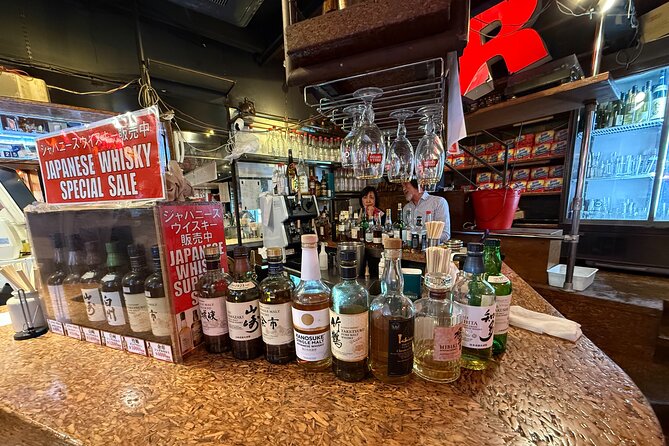
This is also where the drink-pairing idea becomes clear. Drinks are not handed out as a fixed package. You look at the food in front of you, consider what you would like to drink, and order one glass. Sake, Japanese whisky, and other drinks may be available, with choices depending on the venue.
The point is not to identify the correct answer. You are practicing your own taste. If you hesitate, Sho can offer a quiet clue, described as a secret word of guidance. That makes the experience approachable even if you know little about Japanese alcohol.
Allow about 50 minutes here. The pace gives you time to eat, talk, and notice the setting. It also means this is not a place to rush through several drinks. You pay individually for drinks, generally about ¥1,000 per glass, while the selected food is included. Small additional dishes can be ordered if you want more, but they are optional and charged separately.
The craft beer stop changes the pace
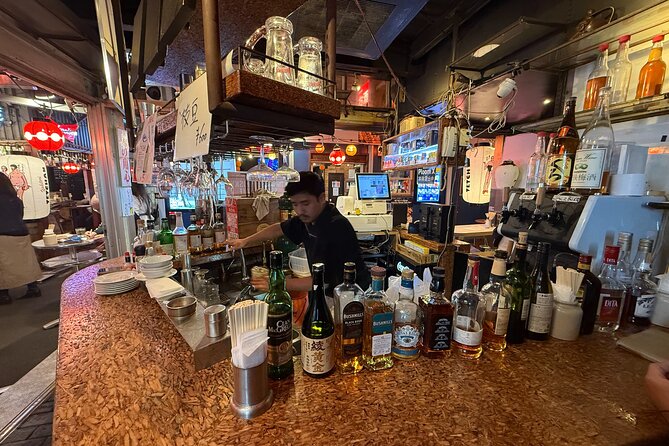
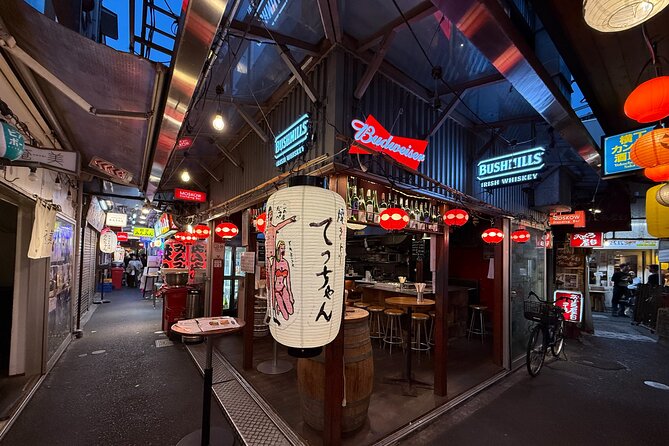
The second training ground moves from tiny alley-bar atmosphere to a craft beer bar with a broad selection of Japanese beer on draft. This is likely to be the highlight for anyone who enjoys comparing styles, aromas, and bitterness.
You can expect one to four carefully chosen dishes alongside the beer. The pairing here is less about formal instruction and more about noticing what changes when a particular beer meets the food. A light beer may sharpen a dish, while a bitter or aromatic beer may change its finish. You do not need technical beer vocabulary. Simply pay attention to what tastes better to you.
The bar also offers more than beer. Japanese craft gin, sake, and other drinks may be available, and the gin and tonic has earned special praise for its quality. This gives non-beer drinkers some room to choose, though the experience still centers on Japanese craft beer.
Sho’s friendly relationship with the staff helps keep this stop comfortable. You are not being marched into a bar where the guide feels like an outsider. The atmosphere is intended to be relaxed, and the staff interaction helps the stop feel connected to local nightlife.
Again, plan on roughly 50 minutes. That is enough time for a measured drink and food, but not enough for a long tasting flight of every tap. If your main goal is to sample a huge amount of beer, this may feel restrained. If you want one or two well-chosen drinks in a local setting, the format makes more sense.
Sushi and sake provide a calm finish
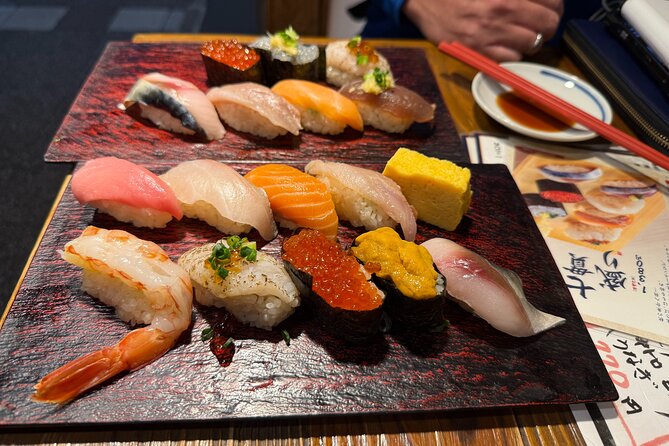
The final stop brings the evening back to the food-and-drink pairing at a sushi bar. You receive a seasonal recommended sushi assortment and choose the sake you most want to drink with it.
This ending is intentionally quieter than the beer stop. Sushi asks you to slow down, and the final pairing gives the evening a sense of shape. You began with the casual energy of Harmonica Yokocho, moved through craft beer, and finish with a focused combination of fish, rice, and sake.
The sushi selection changes with seasonal ingredients and the chef’s recommendations. You should not expect to choose from a long personalized menu based on the information provided. The value is in receiving a selected assortment and matching it with a drink under Sho’s guidance.
Come hungry. Food is served at every stop, and the organizer presents the meal as substantial enough to leave you satisfied by the final sushi course. That is important because alcohol is spread across three locations. Eating along the way makes the pace more comfortable and keeps the evening from turning into a drinking contest.
The sushi stop lasts about 50 minutes. It is the best part of the experience for you if you like quiet conversation and careful bites. It may feel too subdued if you want a final round of loud celebration.
Same place, a different kind of night:
- Osaka Bar Hopping Night Walking Tour in Namba (3 bars, 6 tastes)
★ 5.0 · 958 reviews - Tokyo: Pub Crawl and Bar Tour
★ 4.5 · 951 reviews - Tokyo: Shinjuku Local Bar & Izakaya Crawl Tour
★ 5.0 · 890 reviews - Kyoto: Izakaya Bars Guided Walking Tour
★ 4.9 · 815 reviews
What the pairing format really gives you
The central idea is simple: choose the drink you want in response to the dish in front of you. That sounds modest, but it changes the way you move through the evening.
Many food tours hand you a fixed tasting menu with a predetermined drink. Here, you have a small decision at each stop. Sho chooses the food, and you choose the glass. The pleasure comes from comparing your instinct with the pairing that actually works.
You can also order freely. If you prefer sake at the first stop, craft beer at the second, and another sake with sushi, the format allows that. The drinks are not included in the tour price, so you remain in control of both your selections and your spending.
The translation tools are worth keeping in mind. Sho can communicate, but this is not a detailed English-language food seminar. The experience favors short explanations, gestures, taste, and shared silence. You should book it for companionship and atmosphere, not for a complete lesson in Japanese culinary history.
A small group makes the night personal
The maximum group size is five people. If you join alone or with one other person, you may share the night with other participants. That can be part of the appeal, since the format encourages people to sit together over food and drinks.
A group this small also gives Sho room to notice what you like. He can suggest a drink when you are unsure, adjust the flow if a venue is crowded, and choose another spot if the night calls for it. Routes and venues may change according to crowd conditions and the feel of each place.
That flexibility is useful, but it also means you should not expect a perfectly fixed program. The three-part structure remains the same, but the exact venues and route can shift. If you need a rigid schedule, this may test your patience.
Sho’s role is closer to a drinking companion than a tour conductor. You will not receive a nonstop stream of facts or a tightly managed procession. The reward is a more natural evening, while the tradeoff is less structure.
Is $97.73 a fair price?
The price makes sense only if you value the planning and access around the evening. You are paying for a small group, reserved seating at the first stop, selected food at three venues, and a guide who shapes the pairings and manages the route.
You are not paying for unlimited alcohol. Drinks are extra, usually about ¥1,000 each, and optional food orders also cost extra. A sensible budget should therefore include the tour price plus the drinks you plan to order.
For three hours of food, several local stops, and personal guidance, the price can be reasonable for a special night in Tokyo. It is poor value if you mainly want cheap drinks or a large number of bars. A conventional bar crawl may cost less, but it will not offer the same reserved seating, food coverage, or careful pace.
The included food is the stronger part of the value. You receive four or five dishes at the first bar, one to four dishes at the craft beer stop, and seasonal sushi at the final venue. Since the menus change daily, you are paying for a food experience shaped around what is available that night rather than a fixed menu repeated every evening.
Who should book this Kichijoji evening?
I would choose this experience if you like small groups, local food, and drinks taken slowly. It is especially suited to solo visitors or couples who want company without joining a large bus-style activity.
It also works well if you are curious about sake or Japanese craft beer but do not consider yourself an expert. Sho’s guidance is designed to help you trust your own taste. You do not need to know the difference between every brewing method or sake style.
You should skip it if you want an all-you-can-drink party, loud group games, or a fast route through many bars. It is also not the right choice if you need extensive sightseeing commentary or a polished, highly structured service style.
People with serious dietary restrictions should take extra care. The food normally includes meat, seafood-based broth, and alcohol-based seasonings, and vegetarian, vegan, kosher, and halal requirements cannot be accommodated. Tell the organizer about allergies in advance, though accommodation is not guaranteed.
Participants must be at least 20 years old, Japan’s legal drinking age. Respectful behavior is required, and disruptive conduct can end the experience without a refund.
Practical details before you go
The tour starts at 5:30 pm outside Baskin-Robbins at 1-chome-4-18 Kichijoji Honcho, near the north exit of JR Kichijoji Station. It finishes at the same meeting point after about three hours.
A mobile ticket is provided, and confirmation arrives when you book. The area is close to public transportation, and most people can take part, provided they are comfortable walking between stops.
Wear comfortable shoes and arrive ready to eat. Since the food is spread across three stops, you do not need to eat a large meal beforehand. Bring a payment card for drinks and optional food, as cards are accepted.
Free cancellation is available up to 24 hours before the start time. Changes or cancellations made later are not refunded, so check the local start time carefully.
Should you book it?
Book Samurai Guide Sho’s Kichijoji Night Training if you want a personal evening built around food, drink, and the feel of local Kichijoji. The reserved Harmonica Yokocho seating, Japanese craft beer, seasonal sushi, and small group are the strongest reasons to choose it.
Skip it if quantity matters more than quality or if you want a traditional sightseeing tour. At $97.73 before drinks, this is a deliberate splurge. For the right person, the value is not in the number of bars. It is in having Sho guide you through three carefully paced stops and giving you room to make your own pairing choices.
FAQ
Where does the Kichijoji night training begin?
It begins at 5:30 pm in front of Baskin-Robbins at the north exit of JR Kichijoji Station, at 1-chome-4-18 Kichijoji Honcho, Musashino, Tokyo.
Where does the experience finish?
The activity ends back at the original meeting point near Kichijoji Station.
How long does the experience last?
The experience lasts approximately three hours. Each of the three main stops takes about 50 minutes, with short periods of walking between them.
Are drinks included in the price?
No. Drinks are ordered freely and paid for individually. The usual cost is about ¥1,000 per drink, and credit cards are accepted.
Is food included?
Yes. The experience includes selected food at all three stops: four or five dishes at the first bar, one to four dishes at the craft beer bar, and a seasonal recommended sushi assortment.
How many people can join?
The maximum group size is five people. If you join alone or with one other person, you may be grouped with other participants.
Do I need to know about sake or beer?
No. The pairing activity is designed for people without specialist knowledge. You choose the drink you want with each dish, and Sho can offer guidance if you are unsure.
Can people with dietary restrictions join?
Allergies and dietary restrictions should be shared in advance, but vegetarian, vegan, kosher, and halal diets cannot be accommodated. The food generally includes animal products, seafood-based broth, and alcohol-based seasonings.
Just added around Japan
- Private Yokohama Noge Food & Bar Tour – Local Night Experience★ 5.0 · 4 reviews
- ShinjukuUnfiltered Secret bar restaurant Tour,including GoldenGai★ 4.5 · 2 reviews
- Tokyo Izakaya crawl (A tour of 2 izakayas, 1 bar, and a shrine)★ 5.0 · 8 reviews
- Tokyo Shinjuku Bar Hopping –Wagyu , Ramen & 7 Dishes★ 5.0 · 13 reviews
- Shinjuku: Private Bar Hopping★ 5.0 · 34 reviews
- Tokyo: Shinjuku Hidden Japanese Bar Tour (Neon Light City)★ 5.0 · 2 reviews
- Private Tokyo Local Food and Drink Tour with a Bar Hopping Master★ 5.0 · 22 reviews
- Shinjuku Underground Nightlife Tour: Izakaya Food & Bar Hopping★ 5.0 · 11 reviews
Japan Bar Crawls, compared.
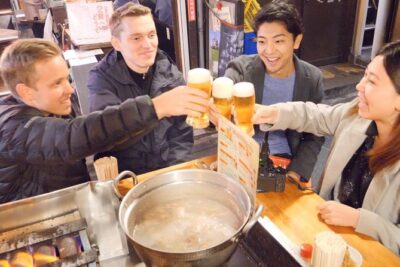
Tokyo Bar Hopping Tour in Shinjuku (All-You-Can-Drink + Dinner)
Read our review →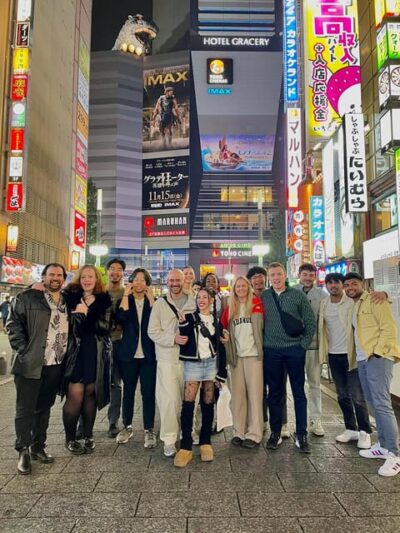
Shinjuku Local Bar and Izakaya Guided Walking Tour
Read our review →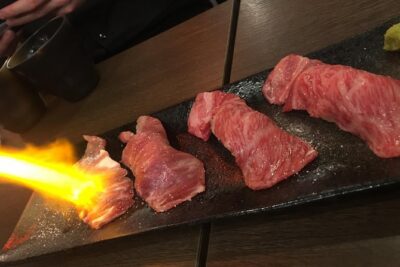
Shibuya Meltdown Nightlife Tour: All-You-Can-Drink Bar Hopping
Read our review →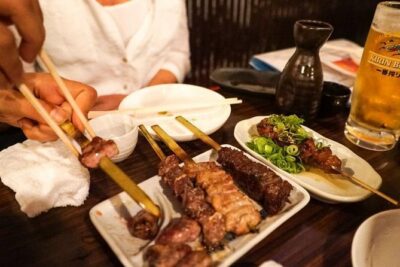
Osaka Bar Hopping Night Walking Tour in Namba (3 bars, 6 tastes)
Read our review →
Browse the lists this tour appears in