
REVIEW · HONSHU, JAPAN
EXCLUSIVE Tokyo: Kichijoji Small-Group Food & Bar Hopping
Kichijoji rewards the curious after dark. I like this tour for its four or five small local stops and for the chance to meet people through Hibi, a guide with real ties to neighborhood shopkeepers. You also get help with ordering, Japanese drinking customs, and useful phrases, which takes the edge off places that can feel hard to enter alone.
The main catch is that drinks cost extra, and you need cash for the bars. Strict vegans, vegetarians, and people with severe gluten allergies may also find the food options too limited. Still, the six-person limit, friendly local welcome, and unusual dishes make this a strong pick for an evening away from Tokyo’s better-known tourist zones.
Key points about this Kichijoji night
- Start at the Kichijoji north exit: Meet by the Baskin-Robbins near the bus stop, an easy landmark beside the station.
- Visit three to five small bars and izakaya: The group size helps you fit into the neighborhood places that larger tours cannot use.
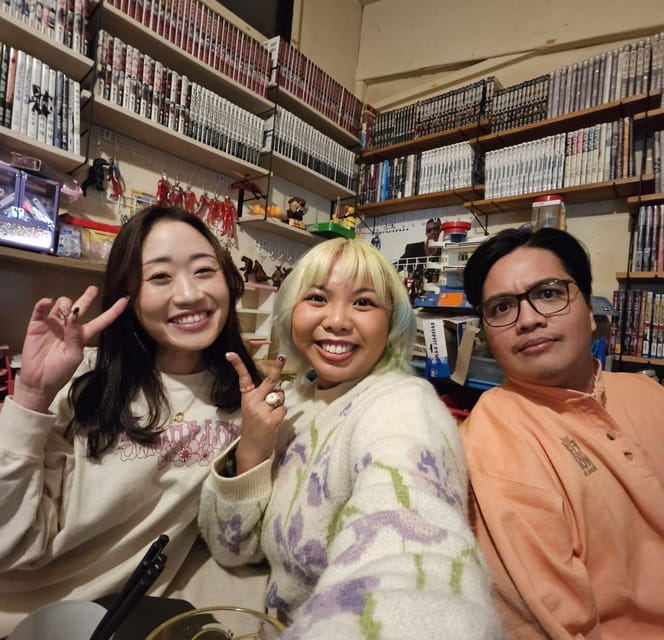
- Hibi gets the highest praise: She is described as warm, funny, well connected, and especially good at helping people talk with locals.
- Try local food at every stop: Your guide recommends dishes and drinks, including food you might not spot on an English menu.
- Bring cash for drinks: Drinks usually cost 400 to 700 yen each, and some small bars may work best with coins.
- Expect a social evening: You may chat and raise a glass with people from the area, not simply eat while a guide talks.
Why Kichijoji makes a fine Tokyo food stop
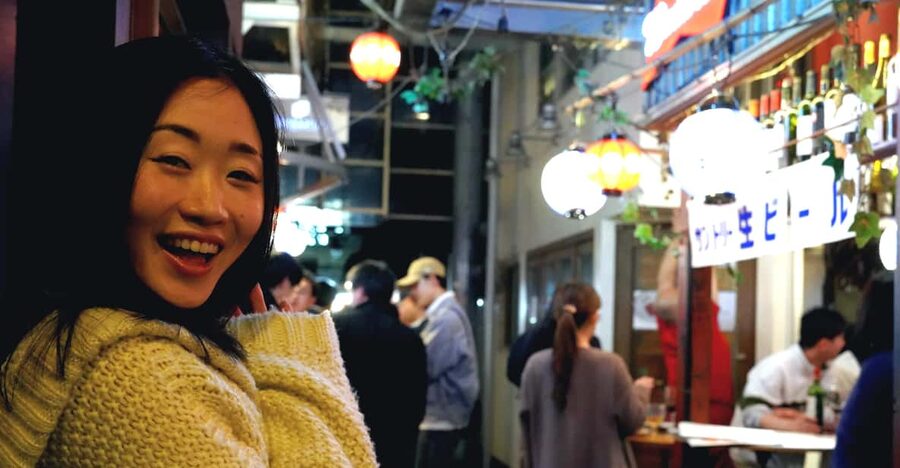
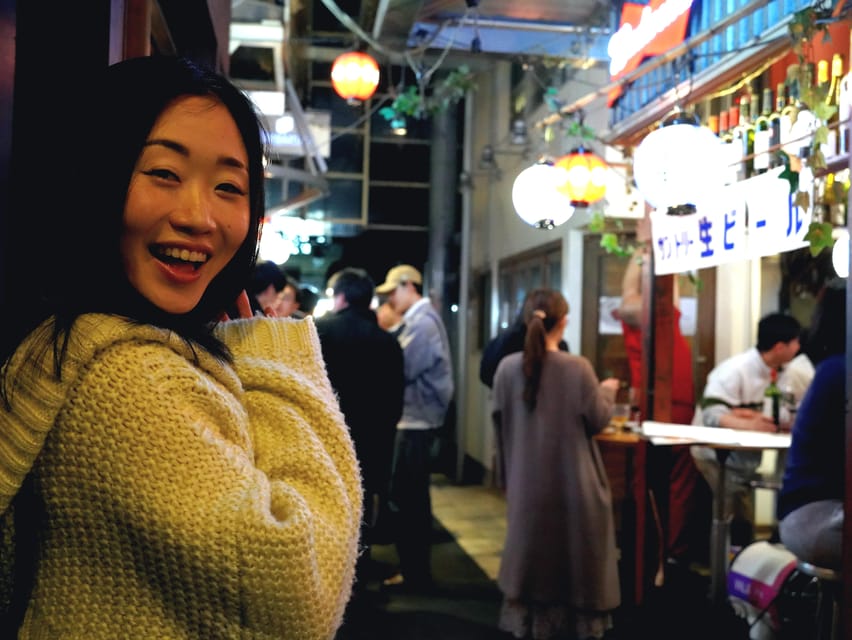
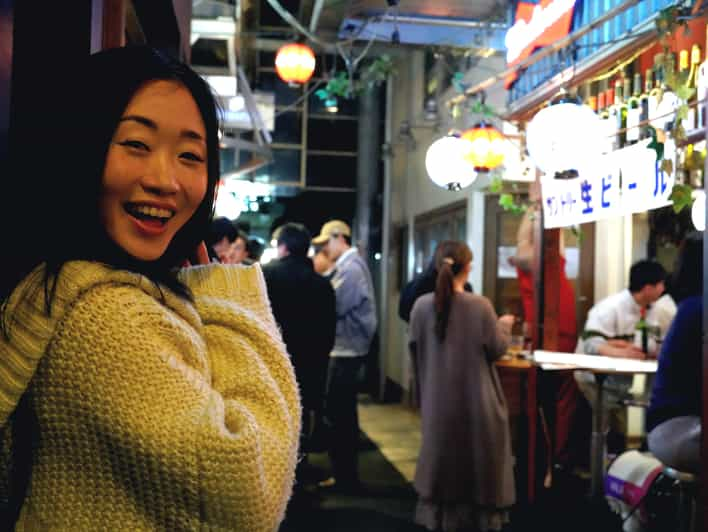
Tokyo has no shortage of food tours, but many stay in famous districts where the route is easy and the welcome is polished for visitors. Kichijoji offers something less packaged. It is known for Harmonica Alley, narrow lanes, family-run places, and bars with a strong regular crowd.
That local character is also the problem. You can walk through Kichijoji alone, but finding the right doorway, understanding the menu, and knowing how to enter a tiny bar can be difficult. A sign asking for no photography or an atmosphere built around regulars may make you hesitate.
This is where the guide matters. The tour is built around introductions and trust. Hibi is described as a local who knows many people in the area, and her role is more than translation. She helps you order, explains the customs around the drinking table, and gives you a way into conversations that may otherwise never start.
I like that distinction. You are not simply being shown a street lined with restaurants. You are being guided into a social setting where the small details matter: how to greet people, how to choose a drink, and how to avoid making a mistake in a compact Japanese bar.
More Bar Crawls in Tokyo:
- Tokyo Bar Hopping Tour in Shinjuku (All-You-Can-Drink + Dinner)
★ 5.0 · 3,587 reviews - Shibuya Meltdown Nightlife Tour: All-You-Can-Drink Bar Hopping
★ 5.0 · 1,058 reviews - Tokyo: Pub Crawl and Bar Tour
★ 4.5 · 951 reviews
Meeting beside Kichijoji Station
The meeting point is the Baskin-Robbins near the north exit of Kichijoji Station, beside the bus stop. That is a useful landmark in a busy station area, and the tour asks you to arrive on time because other groups may be meeting nearby.
Kichijoji is served by major rail lines, but the information provided does not specify the exact train route you should take. I would allow extra time to find the north exit and the bus stop area, especially if you are arriving after a long day of sightseeing.
Bring comfortable shoes. The evening involves moving between several establishments, and the best spots are described as small neighborhood places rather than large restaurants with plenty of room. A camera is listed as useful, but listen carefully when the guide explains photography rules. Some bars have no-photography signs, and respecting that rule is part of being welcomed back.
From the first drink to the final toast
The activity lasts three hours and centers on Kichijoji. The route includes a local bar photo stop listed at about 20 minutes, a guided portion also listed at about 20 minutes, and the wider Kichijoji experience. The itinerary labels overlap a little, so I would treat the three-hour duration as the useful figure rather than expect each listed segment to operate like a separate timed attraction.
The evening returns to the same Baskin-Robbins meeting point. That makes the start and finish simple, though the tour does not provide a separate ending transfer. You will need to arrange your own onward transport after the group returns.
The real structure is hashigo-zake, or bar-hopping. You move from place to place, tasting recommended food and ordering drinks as you go. Three to five izakaya and bar visits are included, along with local food stall visits when suitable.
This format works best when you enjoy variety. Instead of sitting down for one large meal, you get several small snapshots of Kichijoji nightlife. One stop may offer a dish you have never seen before, while another may be better for conversation or a particular drink.
The tradeoff is pace. Three hours passes quickly when you are moving between several places, eating, drinking, and talking. You should not expect a long, relaxed meal at each stop. Think of the tour as a guided sampling of the neighborhood, with the people and atmosphere as important as the food.
What makes the small group useful
The tour limits public groups to six participants. That is not just a pleasant number for conversation. It affects where you can go.
Tiny Japanese bars often have limited seating. A large party may have to stay outside, split up, or use a room designed for tourists. A group of six has a better chance of fitting into compact local places, though the tour does not promise that every stop will be available on every date.
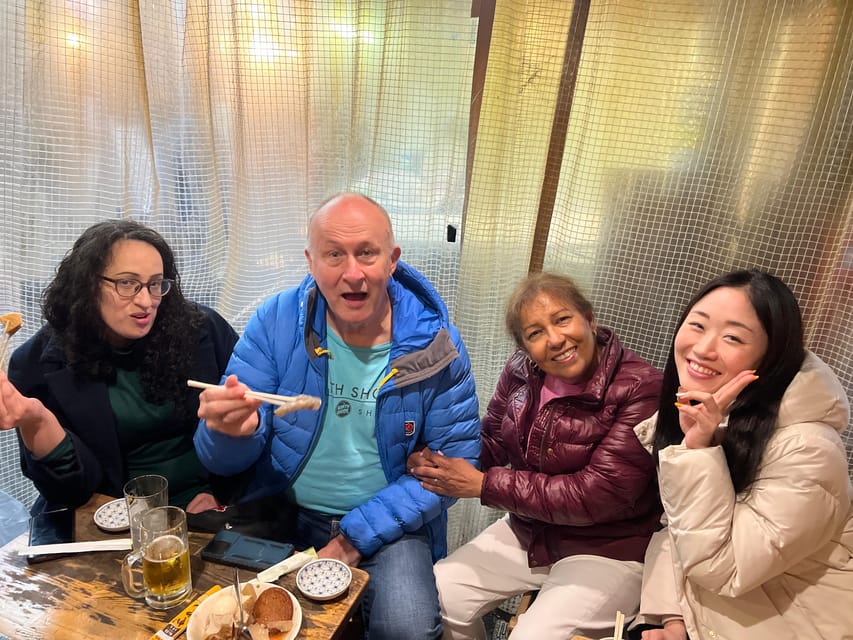
A small group also lets you ask direct questions. You can stop the guide to check a phrase, ask how to eat a dish, or find out why a particular custom matters. If Hibi is guiding your evening, the available comments point to a warm and sociable style. Several people specifically praise her friendliness, local connections, drink suggestions, and ability to make the night fun.
That personal contact is one of the strongest reasons to book. The food is important, but the evening appears to work best because Hibi helps bridge the gap between you and the people behind the counter.
Same place, a different kind of night:
- Tokyo: Shinjuku Local Bar and Izakaya Guided Walking Tour
★ 4.9 · 1,794 reviews - Tokyo: Shinjuku Local Bar & Izakaya Crawl Tour
★ 5.0 · 890 reviews - Tokyo: Shinjuku Bar Hopping with All-You-Can-Drink & Dinner
★ 4.9 · 440 reviews - Shibuya: Local Bar & Izakaya Crawl
★ 4.9 · 354 reviews
Food, drinks, and the Japanese drinking table
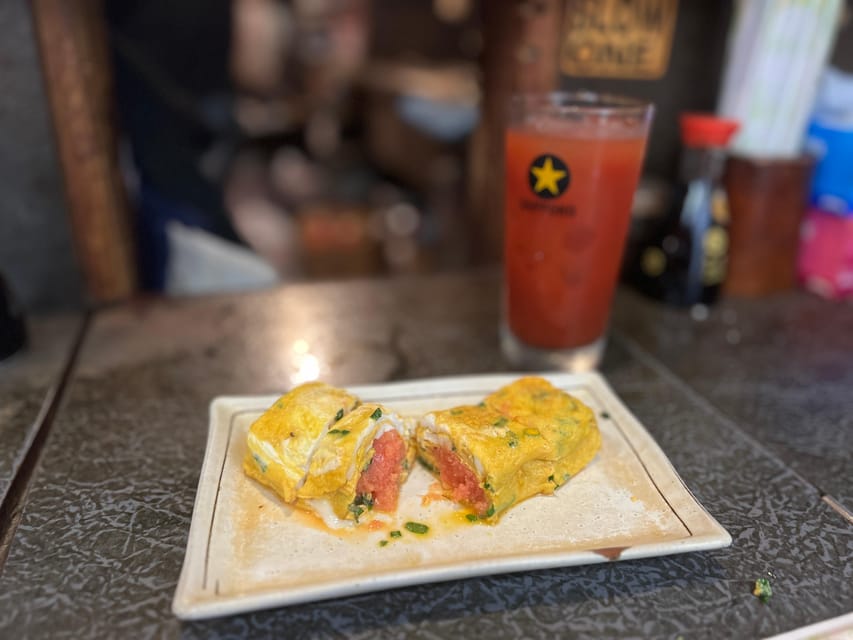
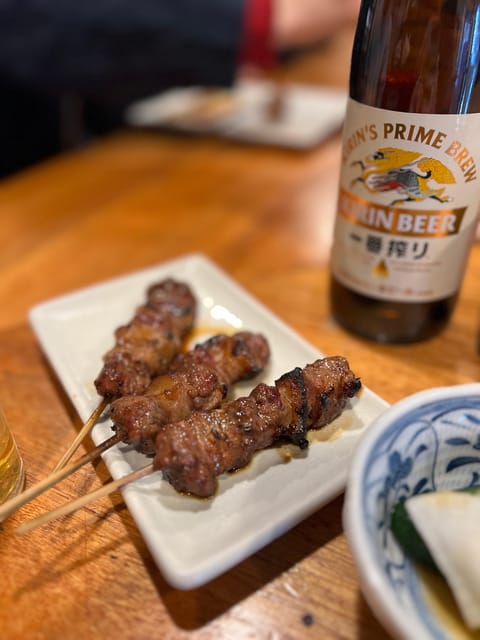
Food is recommended at each izakaya and store. The exact menu is not fixed in the details provided, which is a good sign for a neighborhood-hopping route. You are not being promised the same set meal everywhere. Instead, the guide chooses local specialties and interesting examples of Japanese food.
That can be exciting if you like trying unfamiliar dishes. One person described eating different and unusual foods, while another praised the fact that every stop offered something memorable. The guidance also helps if you cannot read the menu or are unsure what pairs well with your drink.
Drinks are not included in the 109 dollar tour price. Most drinks are said to cost 400 to 700 yen, but the final bill depends on how much you order and how many stops you visit. Bring cash, including smaller coins. The tour specifically suggests using coins for drinks, so do not rely only on a credit card.
This extra cost is easy to overlook when comparing tour prices. If you buy one drink at several stops, the evening can add a meaningful amount to the listed price. On the other hand, you are paying for more than food samples. The fee also covers the guide, interpretation, introductions, etiquette help, and access to a route that may be hard to arrange alone.
I would set a drinks budget before arriving. You can follow the guide’s recommendations without feeling pressured to order heavily. If you do not drink alcohol, the supplied information does not promise a specific nonalcoholic menu, so ask about that before booking.
The guide also explains the Japanese drinking table. This can include how people share food, order for the group, and take part in the rhythm of a social meal. Those details are easy to miss when you eat alone, but they often turn a simple dish into a better cultural experience.
A guide who does more than translate
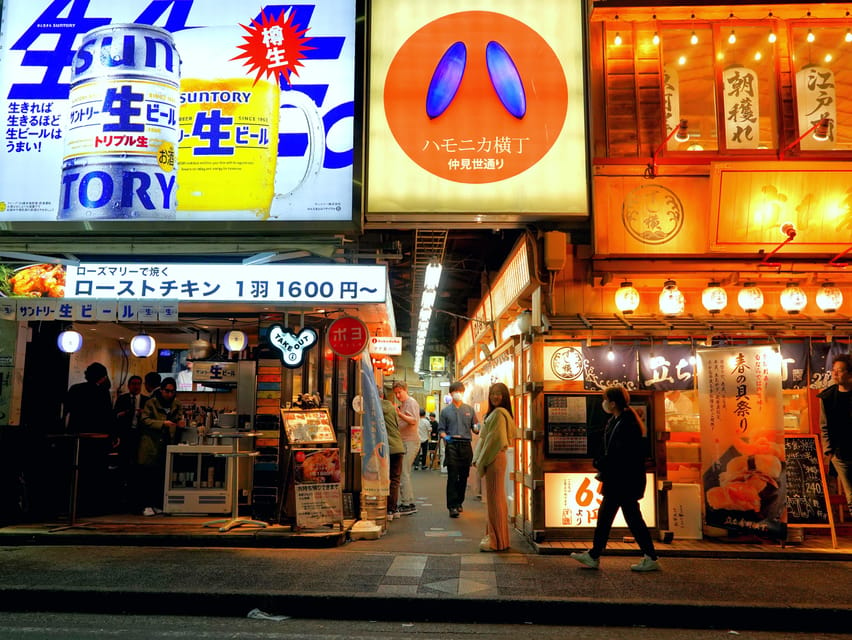
The tour includes full interpretation in English and Japanese. That is especially useful in small bars where menus, ordering systems, and social cues may not be obvious.
Hibi is also described as a language instructor, so you receive practical Japanese phrase tips rather than a textbook lesson. I like this kind of teaching because it gives you words you can use immediately: a greeting, a thanks, or a simple way to respond when someone raises a glass.
The most praised quality is her personal approach. Sophie describes the evening as an unusual look at Tokyo, while Ashley highlights Hibi’s friendliness, food choices, and drink advice. Joe praises the feeling of choosing food and drinks with her recommendations, and Bernd notes that she helped him meet many local people.
Those comments point to a clear pattern. The guide is the heart of the experience. If you prefer a quiet food tour with little conversation, this may feel too social. If you want help meeting people and a host who keeps the night moving, it should suit you well.
The value of 109 dollars
At 109 dollars per person, this is not a cheap dinner. You must also pay for drinks, usually at 400 to 700 yen each, and you may need additional cash for food or small purchases depending on the evening’s route.
The value depends on what you are seeking. If your goal is simply to eat the largest amount of food for the lowest price, a self-guided night in Kichijoji will cost less. You can choose one restaurant, order carefully, and avoid a guide fee.
The tour earns its price through access and confidence. You receive a bilingual guide, introductions to local establishments, food recommendations, etiquette tips, language help, and a small group that can enter places designed for regulars. For a first evening in Kichijoji, that removes much of the guesswork.
I would consider it good value for someone who wants social contact and several different stops. It is less compelling for a repeat Tokyo visitor who already speaks Japanese, knows Kichijoji well, and feels comfortable entering small bars alone.
Free cancellation up to 24 hours before the start and a reserve-now, pay-later option make the booking easier to fit into a changing Tokyo schedule. Check the available start times before committing, since the tour is an evening activity and the exact departure time is not fixed in the details provided.
Who should book this experience
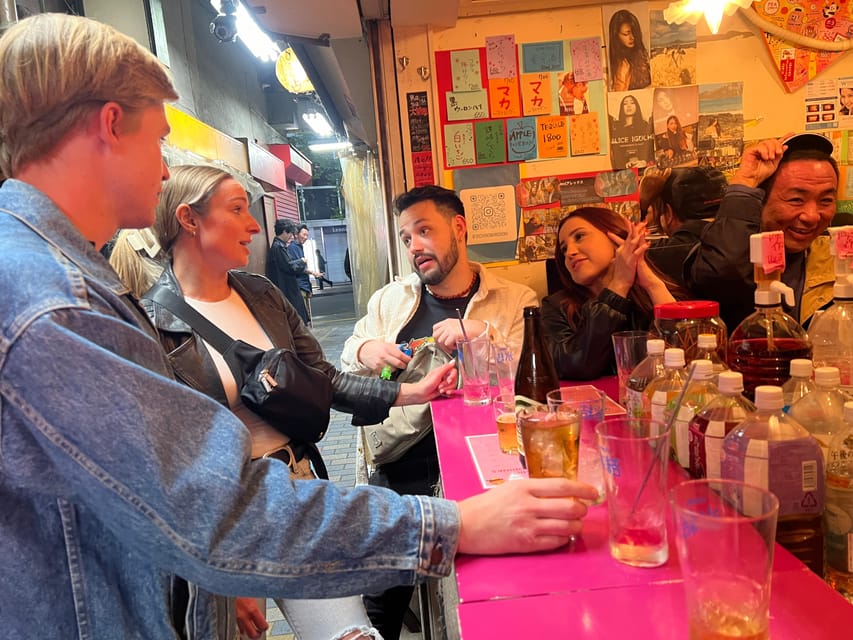
I would recommend it most strongly to adults who want local nightlife but do not want to work out the etiquette alone. The public tour is for ages 20 and over, while private tours welcome all ages.
It also suits solo visitors and couples who want a ready-made social evening. The group is capped at six, and the repeated praise for Hibi’s friendly hosting suggests that you should not expect to be left standing quietly at the edge of the group.
Food-focused visitors will enjoy the range of dishes, but strict dietary needs require caution. The tour cannot accommodate strict vegan or vegetarian diets, or severe gluten allergies such as Celiac disease, because of traditional kitchen methods. Flexible dietary needs may be discussed if you notify the provider when booking.
I would skip it if you dislike bar-hopping, want a fixed dinner menu, or need complete control over ingredients. I would also think twice if you plan to photograph every dish, since some local bars have no-photography rules.
Is this Kichijoji tour right for you?
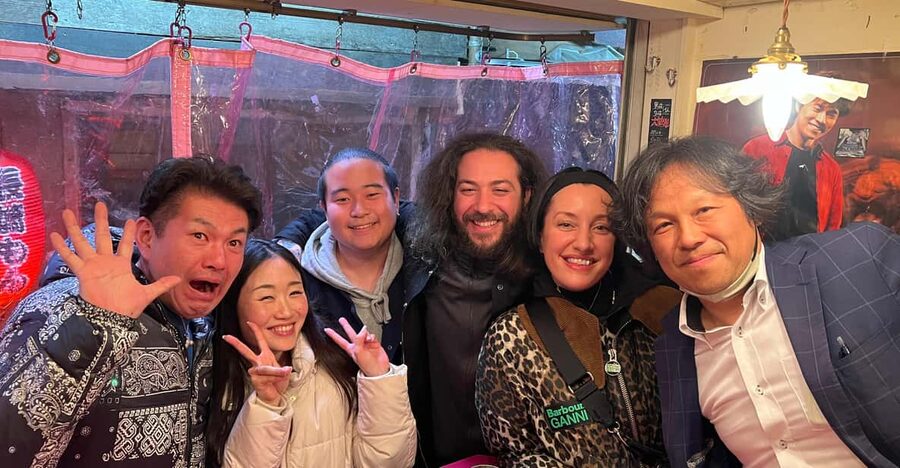
Book it if you want a social, small-group night in a part of Tokyo that can be difficult to navigate alone. The strongest reasons are the six-person limit, Hibi’s local relationships, the mix of three to five bars, and the chance to chat with people from the neighborhood.
Skip it if your priority is a low-cost meal, a quiet restaurant, or a highly predictable menu. Remember to bring cash, budget separately for drinks, wear comfortable shoes, and arrive on time at the Kichijoji north exit.
For the right person, this is less about checking off dishes and more about finding the door, knowing how to enter, and having someone local help the conversation begin.
FAQ
Where does the Kichijoji food and bar tour meet?
Meet at the Baskin-Robbins near the bus stop by the north exit of Kichijoji Station.
How long does the experience last?
The tour lasts three hours and returns to the Baskin-Robbins meeting point.
How many people can join the public tour?
The public tour is limited to six participants.
How many bars and izakaya are included?
The experience includes visits to three to five izakaya and bars, along with local food stall visits.
Are drinks included in the price?
No. Drinks are extra and usually cost about 400 to 700 yen each.
What languages does the guide speak?
The tour is offered in English and Japanese, with full interpretation from a bilingual guide.
What should I bring?
Bring comfortable shoes, a camera, and cash. Coins are also useful for paying for drinks in local bars.
Can people with dietary restrictions join?
Strict vegan, vegetarian, and severe gluten-free diets cannot be accommodated because of traditional kitchen methods. Flexible dietary needs should be discussed at booking.
Just added around Tokyo
- ShinjukuUnfiltered Secret bar restaurant Tour,including GoldenGai★ 4.5 · 2 reviews
- Tokyo Izakaya crawl (A tour of 2 izakayas, 1 bar, and a shrine)★ 5.0 · 8 reviews
- Tokyo Shinjuku Bar Hopping –Wagyu , Ramen & 7 Dishes★ 5.0 · 13 reviews
- Shinjuku: Private Bar Hopping★ 5.0 · 34 reviews
- Tokyo: Shinjuku Hidden Japanese Bar Tour (Neon Light City)★ 5.0 · 2 reviews
- Private Tokyo Local Food and Drink Tour with a Bar Hopping Master★ 5.0 · 22 reviews
- Shinjuku Underground Nightlife Tour: Izakaya Food & Bar Hopping★ 5.0 · 11 reviews
- Tokyo VIP private nightlife tour with a local insider★ 5.0 · 24 reviews
Bar Crawls, compared.
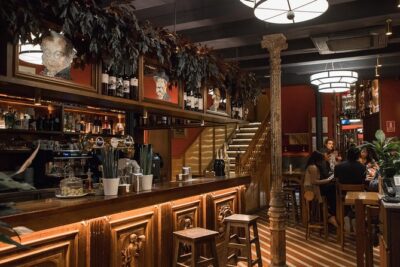
Madrid Tapas & Wine Tasting Walking Tour – Small Group Local Bars
Read our review →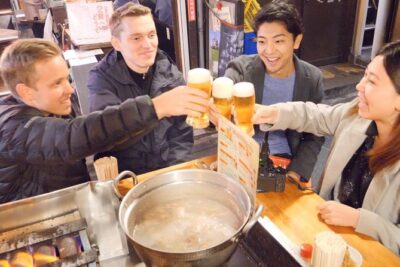
Tokyo Bar Hopping Tour in Shinjuku (All-You-Can-Drink + Dinner)
Read our review →
Guided Pub Tour to Ruin Bars with Games & 6 Shots
Read our review →

Bar and Club Crawl to 5 Central London Venues
Read our review →
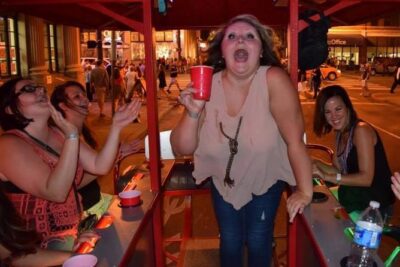
Aruba Nightlife and Barhopping on Chogogo Party Bus
Read our review →
Browse the lists this tour appears in