
REVIEW · LISBON, PORTUGAL
Queer Lisbon Nightlife Tour
History gets a seat at the bar. This 3.5-hour evening walk links Lisbon’s queer nightlife with Portugal’s colonial past, the Carnation Revolution, immigration, and present-day community work. I like the way the experience uses real cultural spaces rather than treating queer Lisbon as a simple pub crawl, and I also like the small group limit of 15 people, which should make discussion easier.
The $66.08 price includes a Portuguese and English-speaking local guide, entry at the final bar, and an updated queer map of Lisbon. You pay separately for dinner and drinks, so the total cost can rise. The walking route also includes hills and several outdoor stops, making comfortable shoes and decent weather important.
Five things to know before you go
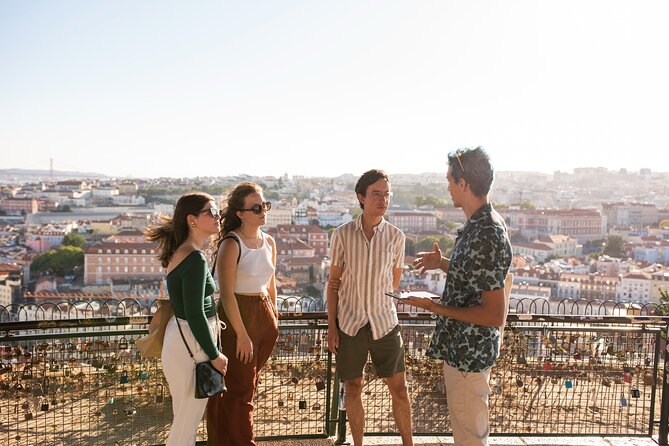
- The evening begins at Miradouro dos Barros: You get an excellent city viewpoint and an introduction to colonialism in Portuguese culture before heading into the nightlife.
- Damas combines food, music, and social change: This restaurant, bar, and concert venue supports immigrant voices and offers a chance to buy Portuguese food.
- The Carnation Revolution gets its own stop: A mural in Graça and São Vicente provides the setting for a clear explanation of dictatorship and the 1974 revolution.
- Má Lingua or A Mata focuses on community survival: You learn about queer-friendly performance spaces, immigrant-owned venues, and closures that affected Lisbon in 2024.
- Drama Bar provides the closing conversation: The tour ends in a queer-owned bar with discussion of associations, collectives, immigration, and the future of LGBTQ+ life in Portugal.
Why this is more than a Lisbon bar crawl
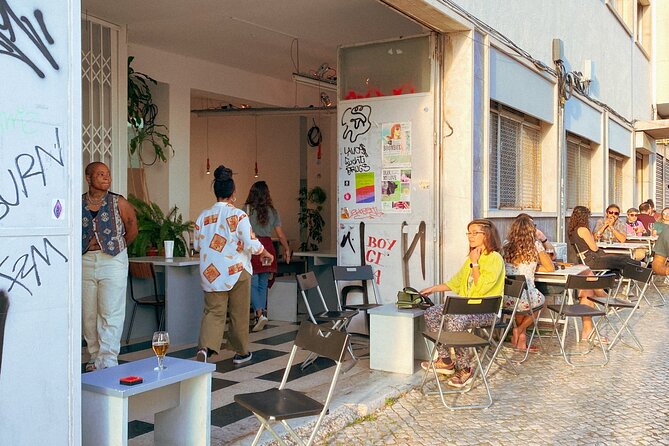
Lisbon has plenty of nightlife tours. This one takes a different route. Instead of moving from bar to bar with only a few facts between drinks, it connects nightlife with politics and social change.
That matters because queer spaces do not exist apart from the city around them. The tour asks you to think about who gets a voice, who can afford to keep a venue open, and how immigration has changed the way LGBTQ+ groups discuss identity and belonging in Portugal.
The structure is also useful. You begin outdoors, move into food and music, return to public history, visit another queer-friendly cultural venue, and finish with a longer conversation in a queer-owned bar. The evening has a clear rhythm, rather than feeling like a series of disconnected stops.
The tour is offered in English, with a Portuguese and English-speaking guide. Herika has received specific praise for making Lisbon’s history feel personal and approachable. That is a good sign for an experience that asks the guide to handle sensitive subjects, including colonialism, dictatorship, immigration, and queer rights.
More Bar Crawls in Portugal:
- Porto: 4 Bar Pub Crawl, 7 Drinks, & Skip-the-Line Club Entry
★ 4.6 · 485 reviews - Porto Pubcrawl: 5h,7 Drinks,4 bars &Skip the line Club Entry
★ 5.0 · 249 reviews - Private Pub Crawl in Lisbon
★ 5.0 · 183 reviews
Starting above Lisbon at Miradouro dos Barros
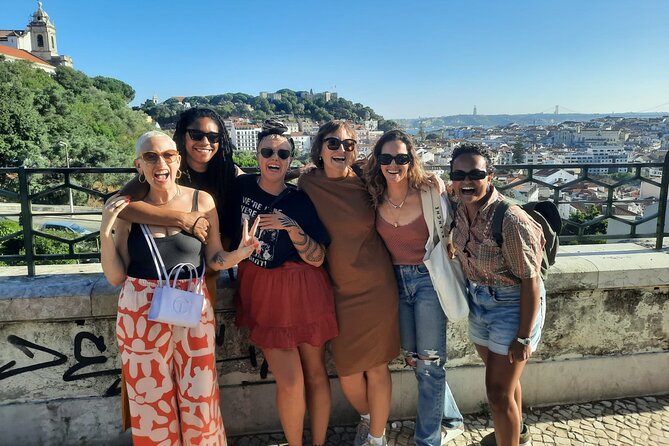
Meet at Miradouro dos Barros on Calçada do Monte at 6:30 p.m. The opening 20 minutes use the viewpoint as more than a photo stop.
You will gather, meet the guide, and get your bearings before the night takes a more serious turn. The city view gives you a physical sense of Lisbon’s hills and neighborhoods, while the conversation introduces the effects of colonialism on Portuguese culture.
This is a strong opening because it places the nightlife discussion in a wider setting. Portugal’s connections with Africa, Brazil, Asia, and other parts of the world shaped its language, culture, migration patterns, and social debates. The tour does not treat Lisbon as a sealed-off European capital. It starts by asking you to consider the wider forces that shaped the city.
The viewpoint is free, but it is still worth allowing a few minutes before the official start to reach the meeting point. The tour begins at a fixed time, and the location is on a hill. If you are carrying a large bag or have limited walking comfort, plan carefully.
Damas: food, music, and immigrant voices
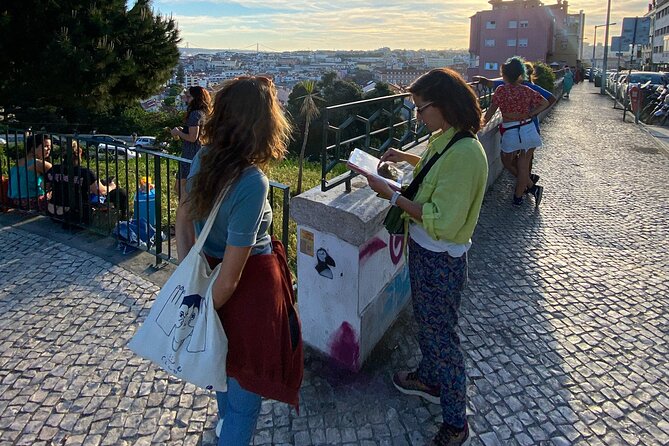
The next stop is Damas, where you spend about 40 minutes. This space combines a restaurant, bar, and concert venue, so it fits the tour’s aim of showing queer culture as part of everyday city life.
Damas also supports immigrants involved in social and political change in Portugal. That makes the stop particularly useful if you want to understand how queer identity and immigration overlap in Lisbon. The focus is not only on nightlife as entertainment, but also on the people and communities shaping public discussion.
You can order Portuguese food here, but your meal is not included in the tour price. That gives you control over your spending, though it also means you should budget beyond the $66.08 fee. If you want a full dinner, you will need to decide how much time and money to devote to eating during the stop.
Forty minutes is enough for a taste of the venue and its role in the city, but it is not a long restaurant visit. I would treat Damas as a cultural stop with food available, not as a formal dinner reservation.
Graça and São Vicente, with the Carnation Revolution in view
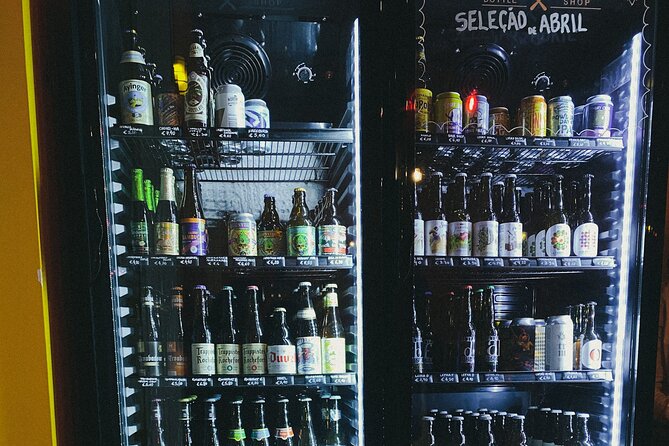
The route then pauses for about 30 minutes near a mural dedicated to the Carnation Revolution. This part gives the evening its clearest political history lesson.
Portugal lived under dictatorship for decades before the 1974 revolution brought a major change in government and society. At the mural, the guide explains the dictatorship, the conditions that led to the revolution, how the uprising unfolded, and why it still matters.
The location works well because the art provides a visual anchor. You are not simply listening to a date-heavy lecture. You are looking at a public expression of memory while hearing how political change affected Portuguese life.
This stop may be the most valuable part of the experience for anyone new to Portugal’s modern history. Many people arrive in Lisbon knowing the city for tiled buildings, viewpoints, and late dinners, but with little understanding of the dictatorship that shaped recent generations. The tour gives you that missing context.
There is no admission charge for the stop. You should expect to remain outdoors, and the tour’s evening schedule means light levels and weather may affect how comfortably you view the mural.
Same place, a different kind of night:
- Porto: Tile Painting and Cocktails in Downtown Porto
★ 4.9 · 484 reviews - Wine and Cheese Tasting Lunch in Portuguese Wine Bar
★ 5.0 · 447 reviews - Tile Painting and Cocktails in Downtown Porto
★ 5.0 · 187 reviews - Lisbon: Tipsy Tour Fun Bar Crawl with a Local Guide
★ 4.9 · 116 reviews
Má Lingua or A Mata, where the focus turns to survival
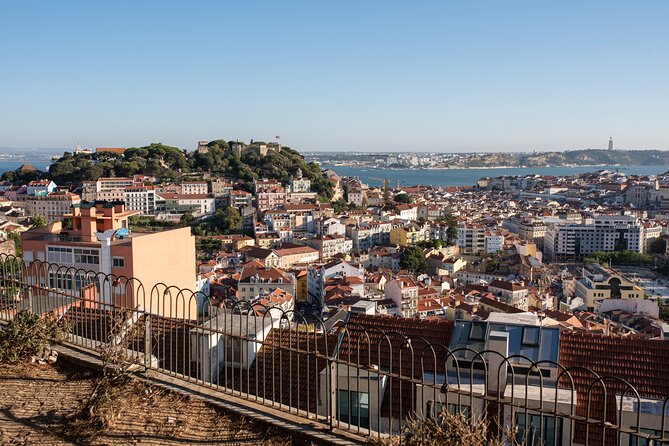
The fourth stop lasts about 40 minutes at Má Lingua or A Mata. Both are queer-friendly bars and cultural spaces that give queer performers a place to work and connect with the community.
This section looks at the practical pressures facing such venues. The guide discusses the difficulties faced by queer-owned and immigrant-owned spaces, including the wave of closures in Lisbon during 2024.
That subject adds needed balance. It is easy to visit a nightlife district and assume that a visible bar scene means a community is secure. A venue can be popular and still face rising costs, changing neighborhoods, limited resources, or pressure to appeal to a wider commercial market. The tour uses these spaces to explain how fragile community infrastructure can be.
The stop may take place at Má Lingua or A Mata, so the exact venue is not fixed in the information provided. Both are queer-friendly cultural spaces, but you should not assume the same program, seating, or food options at each location.
Admission is not included here. You pay for your own drinks, and the evening cost will depend on what you order. If you prefer to keep spending low, you can treat the stop as a chance to listen and enjoy the setting without ordering much.
Drama Bar closes the night with a wider view
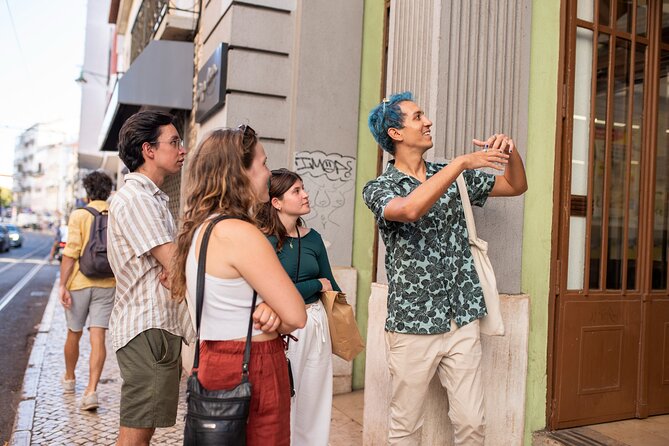
The final hour takes place at Drama Bar, a queer-owned bar on Rua Maria Andrade. This is the one stop where admission is included.
The longer time allowance matters. Instead of rushing through another venue, the group discusses contemporary queer life in Portugal, with particular attention to Lisbon. The conversation includes the work of associations and collectives, the debates they lead, and possible responses to the challenges facing the LGBTQ+ community.
Immigration is also part of the closing discussion. The tour presents immigration as a source of new viewpoints, including a decolonial approach that questions older norms and asks how queer spaces can serve a broader community.
I like this ending because it leaves you with questions rather than a simple nightlife checklist. You finish by considering how organizations and local groups can shape change. The bar setting should also make the subject feel connected to ordinary social life instead of locked inside a museum or classroom.
Drama Bar is the end point at Rua Maria Andrade. It is worth noting the difference between admission and spending: entry is included, but your drinks are not. The last hour is likely the best part of the evening for anyone who wants time to talk with the guide and other participants.
What the $66.08 price gives you
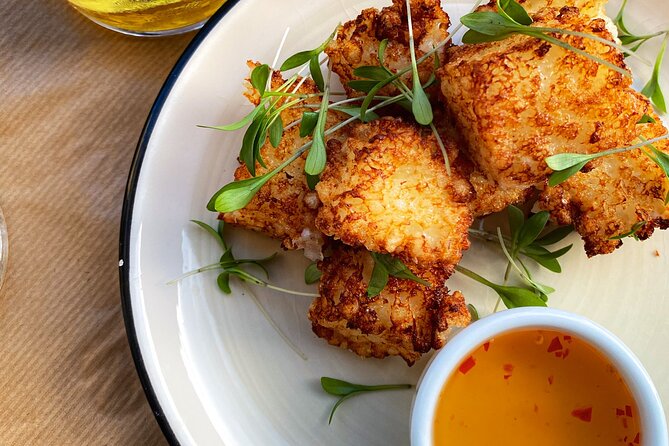
At $66.08 per person, this is not the cheapest way to spend an evening in Lisbon. You still pay for food at Damas and drinks throughout the route, and only the final bar includes admission.
The value comes from the guide’s interpretation and the access to several queer-friendly cultural spaces. You are paying for a small-group route that joins local nightlife to Portuguese political history and current community concerns. If you visited the bars alone, you would see the rooms but miss much of the context that connects them.
The updated queer map of Lisbon adds value after the tour. You receive it as a PDF, which can help you identify other relevant places and continue exploring independently. It is especially useful if you want to return to an area later rather than treating the tour as a one-night activity.
The 4.9 out of 5 rating from 30 ratings and the 97 percent recommendation rate point to strong satisfaction, though the sample is still fairly small. I would book it for the content and the guide, not simply for the promise of a big night out.
Timing, group size, and practical comfort

The tour lasts about three hours and 30 minutes, beginning at 6:30 p.m. That timing suits you if you want to start with a city view and continue into the evening. It also means you should eat lightly beforehand or plan to order food at Damas, since the tour does not include dinner.
The group has a maximum of 15 people. That is small enough for a more personal discussion, but it is not a private tour. If you want a quiet, one-on-one history lesson, this may feel social. If you enjoy meeting people around a shared subject, the group size should work well.
Public transportation is nearby. The start and end points are different, so you will not return to Miradouro dos Barros. The route begins at Calçada do Monte and finishes on Rua Maria Andrade. Check your onward route before the tour, especially if you are heading to another part of Lisbon after Drama Bar.
Most people can participate, and service animals are allowed. The tour requires good weather. If poor weather cancels the experience, you are offered another date or a full refund. Comfortable shoes are sensible because the route includes outdoor walking in hilly parts of Lisbon, though the supplied details do not give an exact distance.
You can cancel for a full refund up to 24 hours before the start time. Changes or cancellations made less than 24 hours before the tour are not accepted for a refund. The experience also requires a minimum number of participants, so a cancellation for that reason brings an offer of another date or experience, or a full refund.
Who will enjoy this evening most
I would recommend this tour if you want to understand Lisbon through its queer communities, immigrant voices, and modern political past. It suits you especially well if you enjoy discussion, local cultural spaces, and history tied to real places.
It is also a good choice for someone who wants a respectful introduction to Lisbon’s queer nightlife without spending the whole night in clubs. The route includes food, bars, music spaces, public art, and a queer-owned venue, but its main purpose is education and conversation.
You may want a different experience if you are looking for dancing, a large party, or a low-cost pub crawl. The tour has a serious side, and the colonialism, dictatorship, closures, and community politics discussions will not suit everyone seeking a purely light evening.
Should you book the Queer Lisbon Nightlife Tour?
Book it if you want history with your nightlife, prefer a small group, and value the chance to support queer-friendly and immigrant-connected spaces. The strongest reason to go is the way the route links Lisbon’s past with the work being done in the city now.
The main caution is cost. At $66.08 before your own food and drinks, you are paying for guidance and context rather than a package of included refreshments. For a thoughtful introduction to queer Lisbon, the price is reasonable. For a simple night of bars, it is harder to justify.
I would choose this tour early in a Lisbon stay, perhaps around the middle of your visit. The map and local context can help you decide what to explore afterward, and the discussion at Drama Bar gives you a better sense of the city than a standard nightlife circuit.
FAQ
How long is the Queer Lisbon Nightlife Tour?
The tour lasts approximately three hours and 30 minutes.
What time does the tour start?
The tour starts at 6:30 p.m.
Where does the tour begin?
The meeting point is Miradouro dos Barros, at Calçada do Monte, 1100-361 Lisboa, Portugal.
Where does the tour finish?
The tour ends at Rua Maria Andrade, R. Maria Andrade, 1170 Lisboa, Portugal.
What language is the tour offered in?
The tour is offered in English and includes a Portuguese and English-speaking local guide.
What is included in the price?
The price includes the local guide, an updated Queer Map of Lisbon in PDF form, and admission at Drama Bar.
Are food and drinks included?
No. Dinner and drinks are not included, so you pay for your own meal and beverages.
How many people can join the tour?
The tour has a maximum group size of 15 participants.
Are service animals allowed?
Yes. Service animals are allowed, and the experience is near public transportation.
Can I cancel for a full refund?
Yes. You can cancel at least 24 hours before the local start time for a full refund. Cancellations or changes made less than 24 hours before the start are not accepted for a refund.
Just added around Portugal
- PubCrawl Azores – Ponta Delgada Bar Crawl★ 4.0 · 4 reviews
- Porto Indoor Mini Golf Experience with Bar★ 3.5 · 4 reviews
- Port Wine Cocktails Workshop at Espaço Porto Cruz, Vila Nova de Gaia, Portugal★ 3.5 · 12 reviews
- Workshop Nate Pastel and Cocktails in Porto★ 5.0 · 64 reviews
- Bar Hopping & Poncha Workshop★ 4.0 · 2 reviews
- Private Paradise Beaches and Famous Beach Bars Tour in Lisbon★ 5.0 · 5 reviews
- Port Wine Tasting Apéritif/Digestif at Portuguese Wine Bar★ 4.5 · 40 reviews
- Portuguese Traditional Dinner & Wine Experience★ 5.0 · 4 reviews
Bar Crawls, compared.
Madrid Tapas & Wine Tasting Walking Tour – Small Group Local Bars
Read our review →
Tokyo Bar Hopping Tour in Shinjuku (All-You-Can-Drink + Dinner)
Read our review →
Guided Pub Tour to Ruin Bars with Games & 6 Shots
Read our review →

Bar and Club Crawl to 5 Central London Venues
Read our review →
Aruba Nightlife and Barhopping on Chogogo Party Bus
Read our review →
Browse the lists this tour appears in