
REVIEW · HONSHU, JAPAN
Tokyo: Shinjuku Local Bar and Izakaya Guided Walking Tour
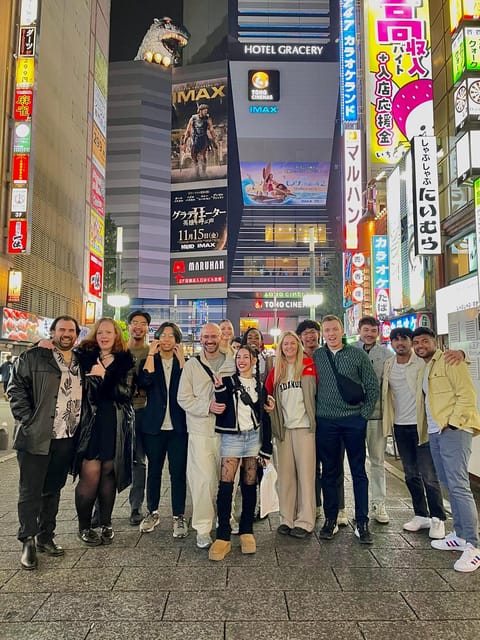
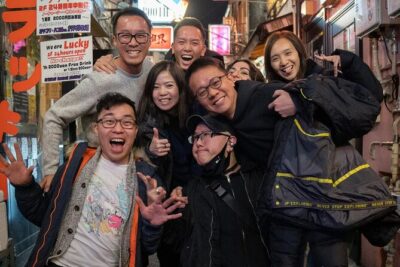
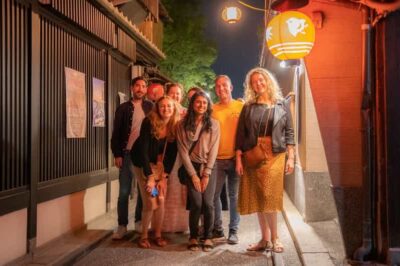
Tokyo gets more interesting after dark. This three-hour walk through Omoide Yokocho, Kabukicho, and Golden Gai gives you a social way to see Shinjuku beyond the main streets, with an English-speaking local guide leading you into small izakayas and bars. I like the local focus and the chance to meet people from many countries in one evening. The main drawback is that food and drinks cost extra, and the exact bars can change on the day.
I also like that the tour ends with karaoke, rather than simply dropping you at the last bar. Guides such as Nao, Naoya, Toshi, Kei, Shota, and Riku are praised for keeping groups included and explaining Japanese drinking customs. Still, this is a nightlife outing, not a quiet cultural walk, and people under 20 cannot join.
Key points at a glance
- Three famous Shinjuku nightlife areas: Walk through Omoide Yokocho, Kabukicho, and Golden Gai in one evening.
- Local guidance matters: Small bars can be hard to find and may not accept casual walk-ins, so a guide can make the experience easier.
- Admission is included: The tour price covers entry fees for each venue, while your food and drinks are extra.
- A social format: Group sizes may be small, though one recent group was about 15 people. Solo visitors are especially likely to meet others.
- Karaoke finishes the night: The final stop gives you a chance to join in with a favorite Japanese pastime.
- Bring cash and WhatsApp: You need cash for purchases, and the guide contacts you through WhatsApp before the tour.
Starting among the red lanterns of Omoide Yokocho
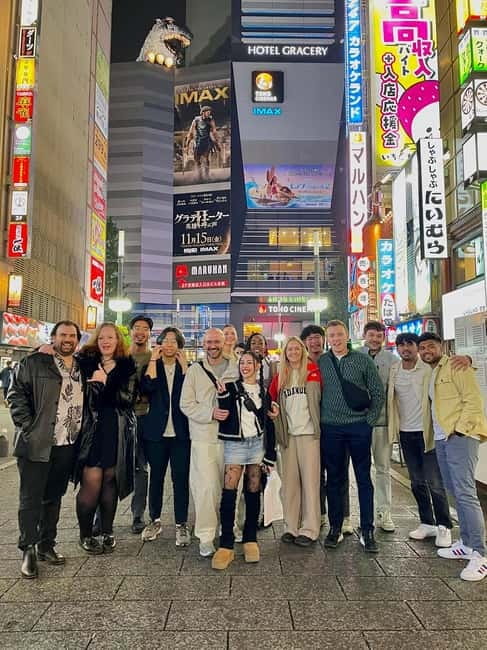
The meeting point is in front of Kitakata Ramen Bannai Omoide Yokocho. Arrive 10 minutes early. This is useful advice in Shinjuku, where a few extra minutes can disappear while you search among station exits, signs, and crowds.
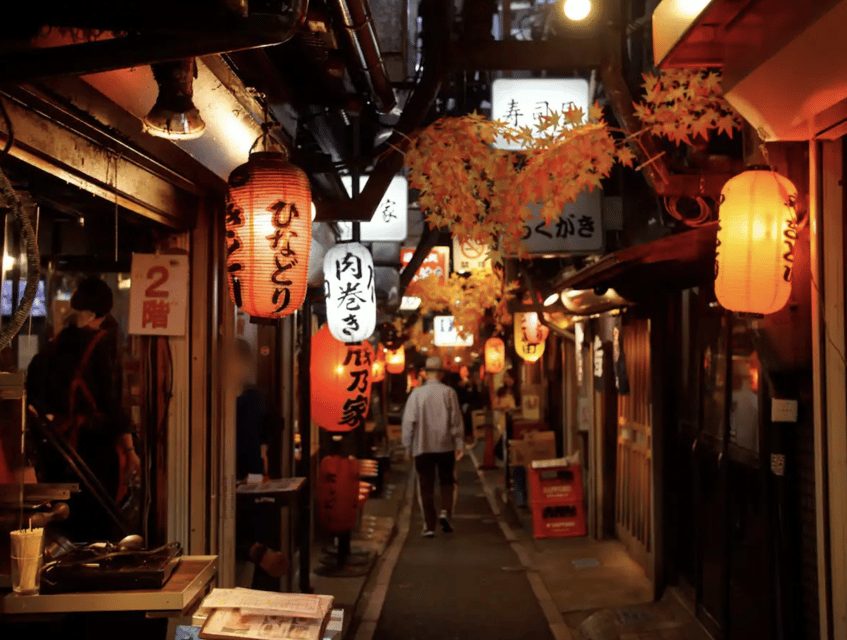
Omoide Yokocho is a compact lane area lined with red lanterns and small local izakayas. Its atmosphere is more intimate than the broad streets around Shinjuku Station. You begin here with the kind of setting many first-time visitors would find difficult to approach alone.
The guide helps set the tone. You are not just walking past restaurant doors and taking photographs. You are learning how an izakaya works, what people order, and how an evening of Japanese drinks and small dishes can unfold.
The first practical point is simple: food and drinks are not included. You pay for your own meals and beverages, so bring enough cash. The supplied details do not give a fixed food or drink budget, and prices can vary by venue and order, so ask the guide what to expect before ordering if you want to control spending.
More Izakaya and Sake Bar Hopping in Tokyo
- Tokyo: Shinjuku Local Bar & Izakaya Crawl Tour
★ 5.0 · 890 reviews - Shibuya: Local Bar & Izakaya Crawl
★ 4.9 · 354 reviews - Tokyo: Shibuya Local Bar & Izakaya Crawl Tour
★ 5.0 · 218 reviews
Seeing Kabukicho beyond its neon signs
From Omoide Yokocho, the route continues into Kabukicho, Japan’s largest entertainment district. The area is known for its bright signs, late-night businesses, unusual shops, and colorful characters. It is a very different mood from the narrow restaurant lanes at the start.
A guide adds value here because Kabukicho can feel confusing. The point is not only to see the famous neon. You get context about the area and a practical sense of where local drinking spots fit within this huge entertainment zone.
The walk also gives you a chance to ask questions as the evening develops. Several guides have been praised for explaining Shinjuku clearly and sharing local recommendations. Naoya, Toshi, Yutaro, and Nao are among the names that appear repeatedly in the strongest feedback, with particular praise for their English, energy, and friendly manner.
The experience is social by design. You may be paired with solo visitors, couples, or small groups from different countries. That can be a major benefit if you want company on your first night in Tokyo, though it may be less appealing if you prefer to move at your own pace.
Finding small bars in Golden Gai
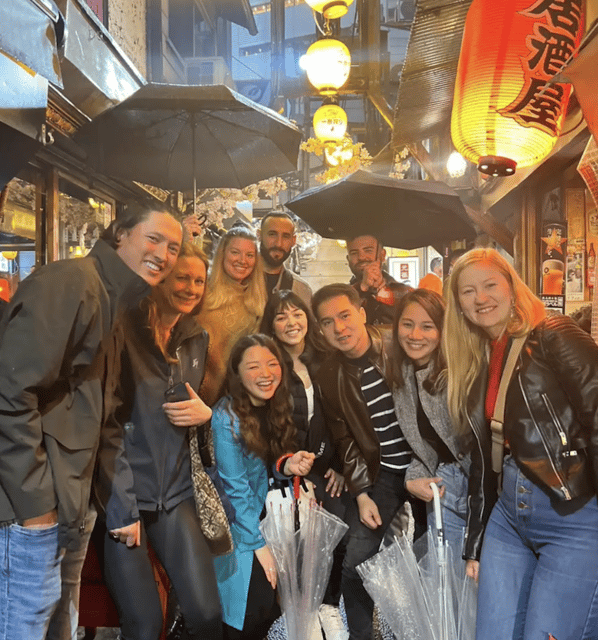
Golden Gai is the most distinctive part of the route. Its narrow lanes are packed with tiny bars, each with its own feel and limited seating. A bar that looks intimidating from the outside can be easy to miss if you do not know where to go.
The tour description says the guide may use local connections to enter places that do not accept general customers. That is one of the clearest reasons to pay for this walk. You are not simply following a map to a famous district. You are getting help with access and introductions.
That access is not guaranteed at every stop. The planned route usually includes the three named areas, but circumstances can prevent the group from entering a particular bar or izakaya. You can ask ahead of time which places are planned for that day if this matters to you.
Golden Gai also brings a few practical limits. Small bars may not be suited to large groups, and the exact experience depends on the group size and the venues available that evening. A small group can feel more personal. A group of about 15 can still work well, but it may require more patience when ordering, sitting, or moving between rooms.
Sake, beer, spirits, and Japanese drinking customs
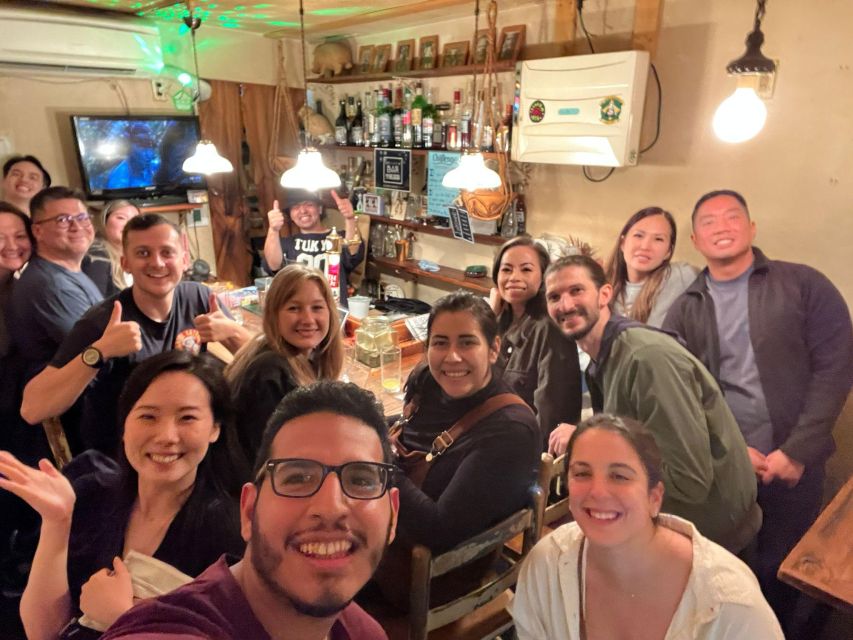
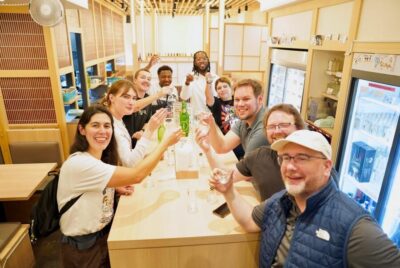
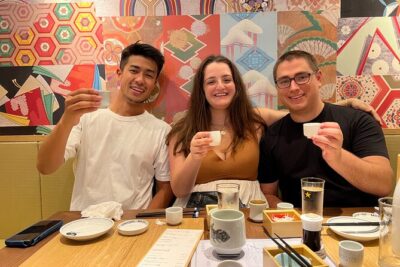
The drinks are a key part of the night. You may try local beer, spirits, and Japanese sake, with some guides offering explanations about different types of sake. Toshi was praised for guiding a tasting of several varieties, while other guides have been noted for explaining Japanese drinking culture in a clear, relaxed way.
I like this format because the lesson happens in the setting where the drinks are normally enjoyed. You are not receiving a formal lecture in a museum. You are learning while ordering, tasting, and talking with the people around you.
Again, the cost structure matters. The $34 price covers the English-speaking guide, the walking tour, admission fees for each venue, and photos taken during the experience. It does not cover your food or drinks. For many people, that is fair value because the guide and venue access are the difficult parts to arrange, but you need to treat the $34 as the entry cost, not the total cost of the evening.
A useful approach is to decide before starting how much you want to spend on drinks and food. Cash is specifically requested, so do not rely on a card. If you want to sample sake without ordering too much, ask the guide for a recommendation and confirm the price when needed.
Same place, a different kind of night:
- Tokyo Bar Hopping Tour in Shinjuku (All-You-Can-Drink + Dinner)
★ 5.0 · 3,587 reviews - Shibuya Meltdown Nightlife Tour: All-You-Can-Drink Bar Hopping
★ 5.0 · 1,058 reviews - Tokyo: Pub Crawl and Bar Tour
★ 4.5 · 951 reviews - Tokyo: Shinjuku Bar Hopping with All-You-Can-Drink & Dinner
★ 4.9 · 440 reviews
Why the karaoke ending works
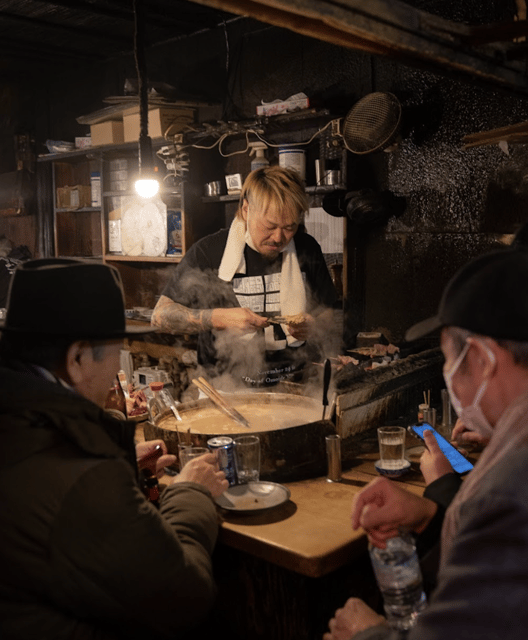
The final stop is a karaoke bar. This gives the evening a clear finish and changes the mood from watching Japanese nightlife to taking part in it.
Karaoke is repeatedly highlighted as one of the best parts of the experience. Shota and Naoya received special praise for their singing, and one guide was described as an excellent Japanese-song performer. You do not need to be a confident singer to enjoy the stop, but you should expect a more active evening than a standard sightseeing walk.
The karaoke portion also helps the group bond. By this point, you have walked together, shared drinks, and learned names. Singing, cheering, or simply listening can make the end feel less like a scheduled stop and more like a night out with new acquaintances.
That said, karaoke will not suit everyone. If you dislike loud rooms, group singing, or being encouraged to participate, this ending may feel less comfortable. You can still treat it as a social stop, but the tour is built around joining the evening rather than watching from the sidelines.
The guides make the biggest difference
The strongest feature of this experience is the guide. The route itself is appealing, but Omoide Yokocho, Kabukicho, and Golden Gai can all be visited without paying for a tour. The guide earns the fee by helping you enter places, explaining local habits, handling the group, and making conversation easier.
Names frequently associated with strong evenings include Nao, Naoya, Toshi, Kei, Riku, Yuna, Shota, Taro, Kento, Rika, and Asato. The feedback points to a consistent pattern: friendly English, high energy, local recommendations, and attention to people who might otherwise feel left out.
Kei is praised for managing a group of about 15 people. Toshi is praised for being clear and accommodating. Nao is repeatedly described as warm and fun, while Kento helped make the experience good enough for one group to return to the same area the next day. These details suggest that the company gives guides room to add personality rather than delivering a stiff script.
The guide can also help if you are not feeling your best. One person who was dealing with allergies and jet lag described receiving kind, understanding treatment. That does not guarantee every situation will be handled the same way, but it is a useful sign for solo visitors or people adjusting to Tokyo time.
Is $34 a fair price?
At $34 per person, the tour is reasonably priced for a three-hour guided evening in central Tokyo. You receive a live English-speaking guide, walking guidance, photos, and admission fees at each venue. The real value lies in reducing the uncertainty of choosing a bar in a district packed with options.
You should compare the price with what you want from the night. If you already speak Japanese, know Shinjuku well, and enjoy choosing bars on your own, you may prefer to explore independently. If you are visiting for the first time, want to meet people, or feel unsure about entering tiny local bars, the fee is easier to justify.
The price does not include the part that can grow fastest: drinks and food. I would budget separately and bring cash. You may want to eat lightly beforehand, then order selected dishes and drinks during the stops rather than assuming the tour provides a full dinner.
Who will enjoy this Shinjuku night walk?
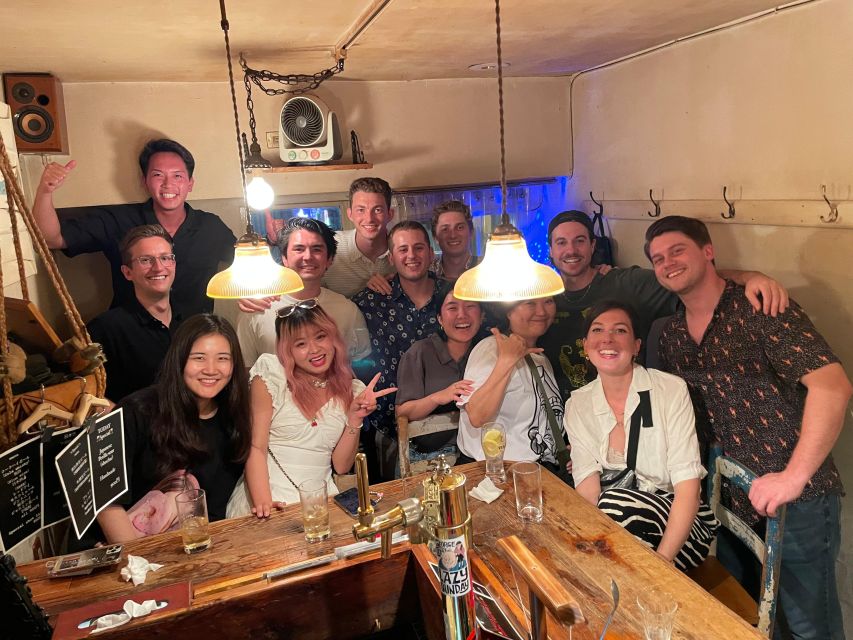
This experience is a strong fit for solo visitors. Several people describe meeting friends from around the world, and the group format gives you an easy way to start conversations without having to enter a bar alone.
It also suits first-time Tokyo visitors who want help getting oriented in Shinjuku. One evening can introduce you to three major nightlife areas, and you can return later with a better idea of where you want to spend your time.
Couples and friends can enjoy it too, especially if they want a guided night rather than a private dining experience. The social setting means you will share attention with the group, so it is not the best pick for a quiet date or a carefully planned meal.
You must be at least 20 to participate. Download WhatsApp before the tour because the guide uses it to contact the group and help with the meeting arrangements. Arriving early is also wise, especially at Omoide Yokocho.
Things to know before you book
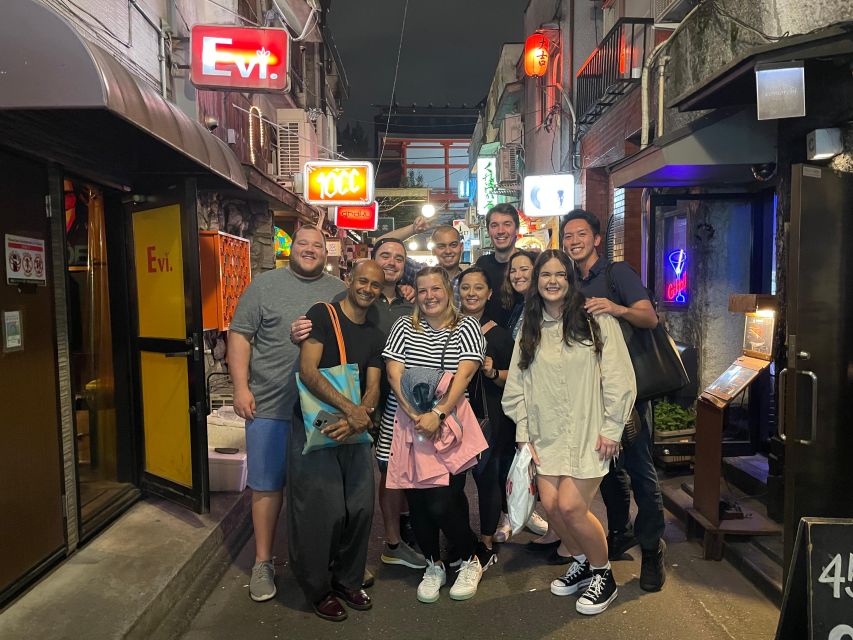
The route is planned around Omoide Yokocho, Kabukicho, and Golden Gai, but the actual bars may change. Ask about the planned venues in advance if a particular type of bar or izakaya matters to you.
The tour lasts three hours, though a lively night may continue afterward. Some people have carried on after the scheduled experience, but that is not part of the stated tour and should not be treated as included.
You should also expect walking, late-night streets, drinks, and a group atmosphere. Wear something comfortable and bring cash. Most of all, arrive ready to talk with people. The social side is not a minor extra here. It is central to the experience.
Should you book this Shinjuku tour?
I would book it if you want a friendly introduction to Tokyo nightlife and do not want to guess which small bars are open to newcomers. The combination of local guidance, three different Shinjuku districts, sake, izakaya food, and karaoke gives you a full evening for a modest base price.
I would skip it if you want a private, quiet meal or dislike group activities. You also need to allow extra money for drinks and food, and the exact venues are not fixed.
For solo visitors, first nights in Tokyo, and anyone curious about Japanese drinking culture, this is one of the more useful ways to get your bearings after dark. Choose the tour, bring cash, install WhatsApp, and let the guide handle the awkward first step into Shinjuku’s smaller nightlife spots.
FAQ
How long does the Shinjuku bar and izakaya tour last?
The tour lasts three hours. Check the available starting times when booking.
What areas does the tour visit?
The usual route includes Omoide Yokocho, Kabukicho, and Golden Gai. The exact bars and izakayas can change due to circumstances.
Are food and drinks included?
No. Food and drinks are not included, so bring cash to pay for what you order.
What is included in the $34 price?
The price includes an English-speaking guide, the walking tour, admission fees for each venue, and photos taken during the tour.
Where is the meeting point?
Meet the guide in front of Kitakata Ramen Bannai Omoide Yokocho. Arrive 10 minutes before the scheduled start.
Can people under 20 join?
No. The activity is not suitable for people under 20 years old.
Just added around Tokyo
- ShinjukuUnfiltered Secret bar restaurant Tour,including GoldenGai★ 4.5 · 2 reviews
- Tokyo Izakaya crawl (A tour of 2 izakayas, 1 bar, and a shrine)★ 5.0 · 8 reviews
- Tokyo Shinjuku Bar Hopping –Wagyu , Ramen & 7 Dishes★ 5.0 · 13 reviews
- Shinjuku: Private Bar Hopping★ 5.0 · 34 reviews
- Tokyo: Shinjuku Hidden Japanese Bar Tour (Neon Light City)★ 5.0 · 2 reviews
- Private Tokyo Local Food and Drink Tour with a Bar Hopping Master★ 5.0 · 22 reviews
- Shinjuku Underground Nightlife Tour: Izakaya Food & Bar Hopping★ 5.0 · 11 reviews
- Tokyo VIP private nightlife tour with a local insider★ 5.0 · 24 reviews
Izakaya and Sake Bar Hopping, compared.

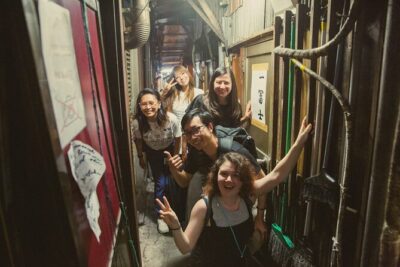
Shinjuku Izakaya and Golden Gai Bar Hopping Tour
Read our review →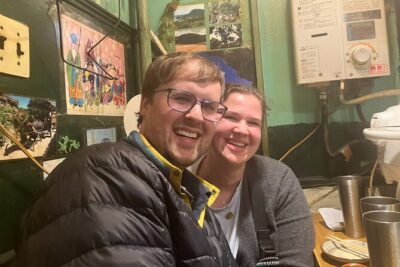
Osaka Authentic Local Izakaya Hopping Experience: Food & Drinks
Read our review →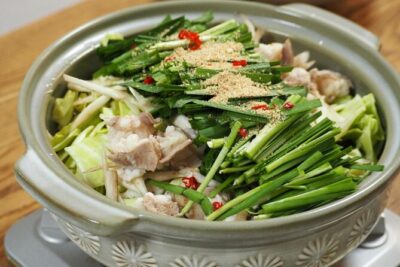
In Fukuoka! Guide to an izakaya only 100% locals know/Bar Hopping
Read our review →Browse the lists this tour appears in